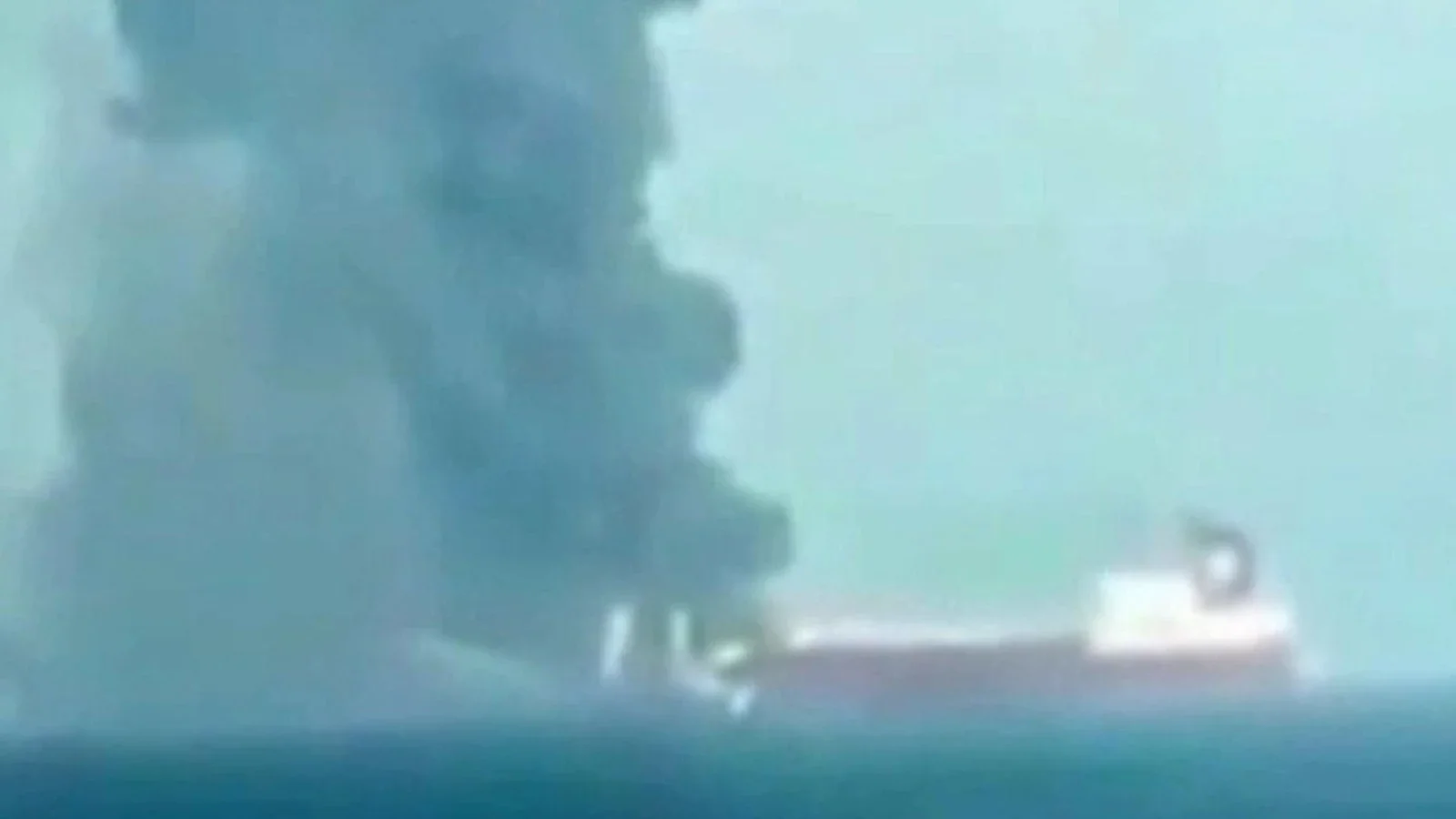
Iran's navy and Revolutionary Guards said on Saturday that fires had broken out on a total of three oil tankers that struck mines in the Strait of Hormuz, where Tehran has restricted navigation. The claims, carried by Iranian state media, have not been independently verified, and the statements gave no names or origins for the vessels involved.
In a statement carried by the Iranian state broadcaster early on Saturday, the navy of the Islamic Revolutionary Guard Corps said two oil tankers that had switched off their radar and positioning systems and were secretly attempting to transit the strait through an unauthorised route exploded and caught fire after striking a naval mine in the south of the waterway. One of the vessels was a supertanker, the Guards said, adding that flames from the ship illuminated the southern shores of the strait during the night.
A separate statement from Iran's conventional navy said another tanker, navigating through what it called the unsafe and prohibited zone east of the Strait of Hormuz with its tracking and identification systems switched off, caught fire and was forced to stop after striking a naval mine.
The IRGC Navy warned shipowners and shipping companies against attempting to navigate the waterway without coordinating with its traffic control centre and adhering to Iranian arrangements for the strait. The force said the vessels had violated Iranian regulations by attempting to pass through without coordination.
A week of reported mine strikes
The reported incidents are the latest in a series of claims about fires and explosions on ships in the strait in recent weeks. On Thursday, the Iranian Army said two tankers had caught fire after entering what it called a forbidden zone east of the strait and striking naval mines.
On Wednesday night, the IRGC Navy reported that two supertankers carrying more than four million barrels of oil were disabled by explosions while attempting to cross the strait. On Friday, the Guards released footage of a large plume of smoke rising from a vessel it said was carrying liquefied gas and had hit a mine in the south of the strait.
Tehran has insisted that vessels obtain its authorisation to cross the strait since war erupted with the United States in February, and has attacked ships that do not comply. Iran tightened its control over the waterway on 28 February, following joint strikes by the United States and Israel on Iranian territory.
The United States, in response to Tehran's choking of the strategic trade route, has imposed a naval blockade on Iranian ports and provides military support to tankers using the waterway. The strait carries a large share of the world's seaborne oil, and disruption there has direct consequences for global energy markets.
Conflicting accounts over Bahrain
Separately, Iran and the United States offered conflicting accounts of an incident involving a US radar system in Bahrain. Iran said it had destroyed the radar, while Washington said the system was unharmed and that two Iranian drones had been intercepted, according to NOS.
The conflicting claims are the latest sign of pressure around the Strait of Hormuz and the wider Gulf, where the war between the United States and Iran has turned shipping into a front line. Each side has accused the other of escalation, and independent verification of incidents in the waterway has been difficult.
For shipping companies, the pattern of reported mine strikes and warnings has made transit through the strait a question of risk and authorisation. Iran's demand that vessels coordinate with its traffic control centre, and its warnings of consequences for those that do not, have added a layer of uncertainty to one of the world's most important shipping routes.