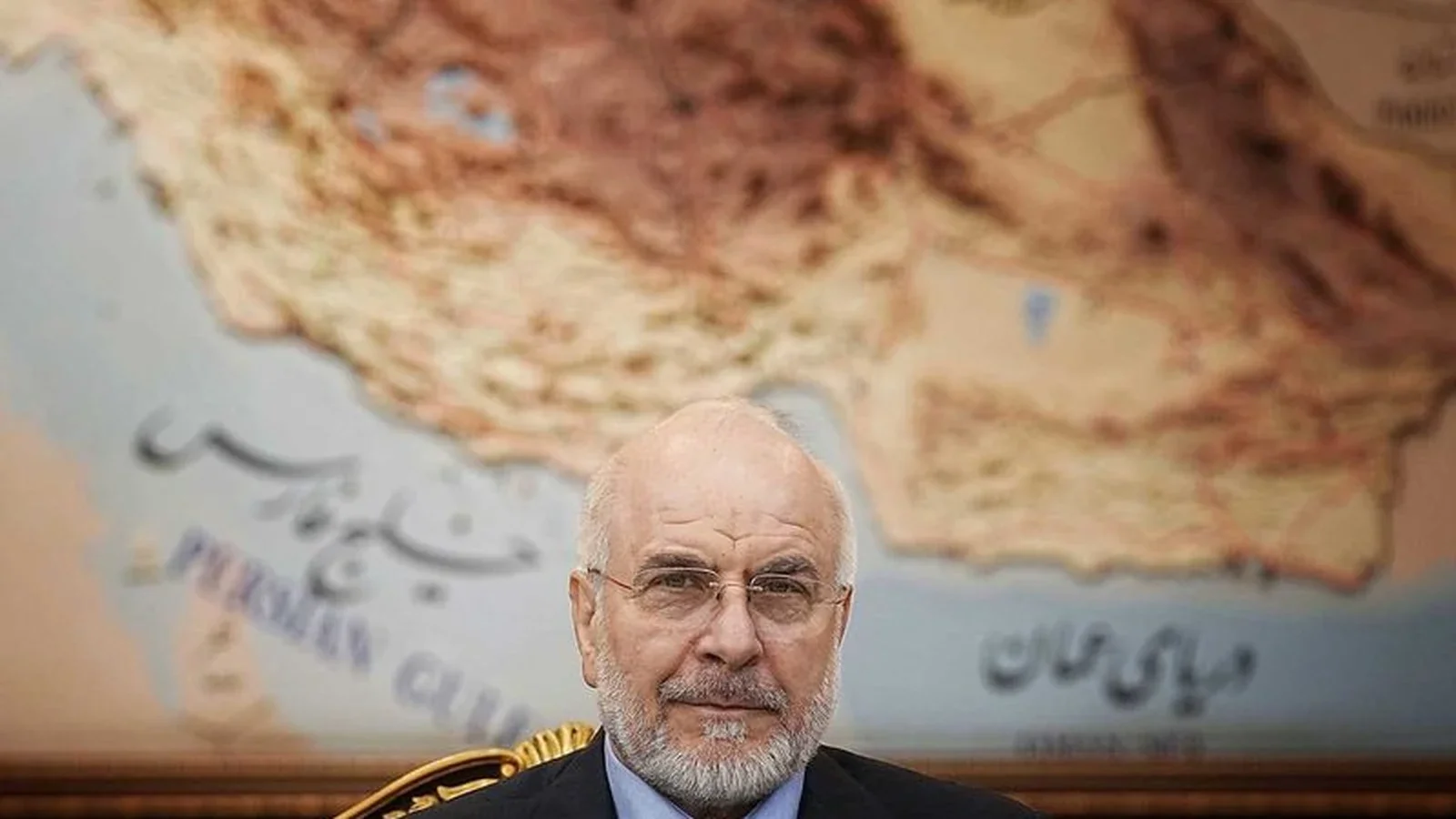
"We do not care whether the US chooses the path of negotiations or war. If it accepts our seven reasonable conditions, the door to an agreement will be open," Ghalibaf said, according to Iran's semi-official Mehr news agency. He added: "If the US makes another mistake, Iran's powerful armed forces will determine the geography of the battlefield."
The seven conditions
Iran has conveyed its conditions to Washington through a Qatari mediator. As Iranian officials have described them, they are: an end to the American naval blockade of Iranian ports; safe passage for commercial ships and tankers through the Strait of Hormuz; removal of unilateral sanctions; an end to restrictions on Iranian oil exports; release of Iran's frozen assets; Iran's nuclear material staying in Iran; and an end to the war.
Ghalibaf said the conditions were the result of the Iranian people's sacrifices. He also dismissed recent remarks by US Treasury Secretary Scott Bessent as diplomatic frustration, and criticised tanker owners for sending vessels into the restricted area, accusing them of relying on assurances from US President Donald Trump.
Trump says no deal is needed
The warning comes as Trump weighs his next move. On 9 November he said: "Iran, militarily, is effectively over. We're just keeping it the status quo." Three days later he wrote on Truth Social: "We don't need a deal with Iran." Secretary of State Marco Rubio said on 13 November that there was "no need for military action", and Reuters reported on Saturday, citing three people familiar with the discussions, that Trump was considering holding off on further strikes.
Saudi Arabia and Turkey have urged the US against new strikes on Iran, according to the Sunday Guardian's live coverage. Ghalibaf's remarks were also read as a response to that debate in Washington, setting out Tehran's terms in public while warning of a military response if the US attacks again.
A war now in its ninth month
The conflict began on 28 February, when the United States and Israel launched joint strikes against Iran, killing Supreme Leader Ali Khamenei and several senior military commanders. The war is now in its ninth month, with diplomatic efforts to stop the attacks and reopen the Strait of Hormuz stalled. Al Jazeera reported that Ghalibaf had told it in an interview last week that Iran had conveyed the seven conditions through a Qatari mediator and was awaiting an official US response.
What happens next
For now, neither side has moved. Trump has alternated between warnings of further military action and indications that he could pursue a diplomatic route, while Tehran says it will not accept a prolonged state of uncertainty. Ghalibaf's speech leaves the door to an agreement open on Iran's terms, and warns that any fresh American attack would trigger a response from Iran's armed forces.