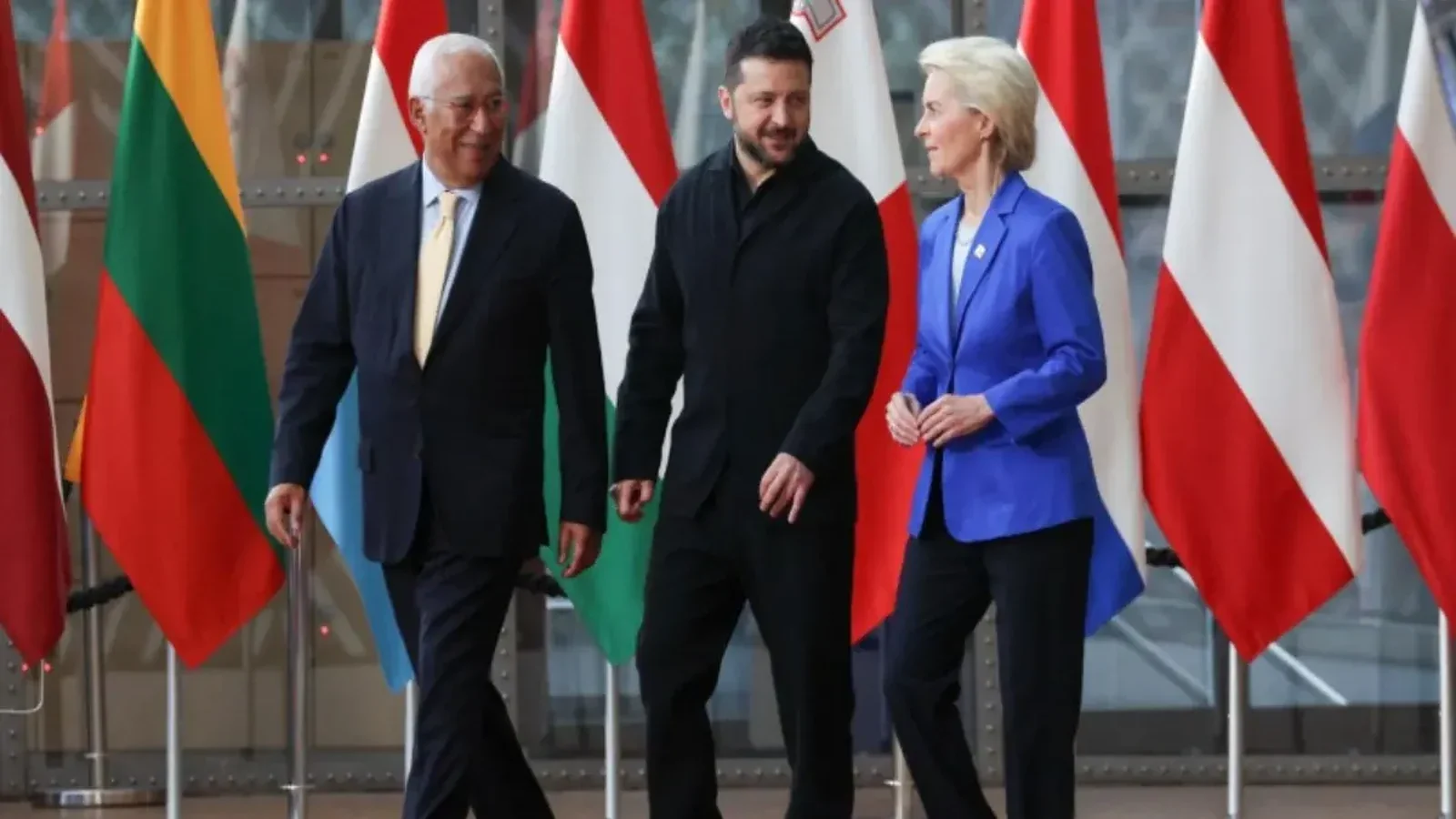
EU leaders have agreed that Europe's team for Ukraine peace talks will comprise five major military powers, non-member Britain plus France, Germany, Italy and Poland, and EU institutions, European Council President Antonio Costa said on Friday. The decision was taken at an informal EU leaders' summit in Dublin, after months of wavering over who will speak for the continent.
EU officials said the representatives for Europe in future talks were likely to be national security advisers from the five military powers, plus delegates from the European Commission and the European Council. NATO is also likely to participate, according to reports from the summit.
The formula, which Politico called the E5, pairs the five national delegations with the European Commission and the Council. The Dublin summit had been convened around artificial intelligence, but the question of who speaks for Europe in any peace negotiation overshadowed that programme.
The agreement follows a diplomatic breakthrough earlier in the week. Russian President Vladimir Putin agreed on Thursday to let European representatives join the next round of Ukraine peace talks, US special envoy Steve Witkoff said after meeting Putin at the Kremlin. Witkoff and fellow envoy Jared Kushner then travelled to Dublin to brief Ukrainian President Volodymyr Zelenskyy on Thursday evening.
Kremlin sets conditions for a European role
The Kremlin said on Friday that Russia would be open to European countries taking part in Ukraine peace talks if it saw they genuinely intended to contribute to peace. Spokesman Dmitry Peskov said Europeans could only join if they demonstrated a readiness to contribute constructively to the peace process.
Russian officials have also called for a broad agreement on Europe's security architecture to be reached before specifics of the war are addressed. Putin said Moscow had always been open to talking to the EU about Ukraine, but signalled serious outstanding differences, and warned that deploying Western troops in Ukraine could reignite the conflict.
Despite US assurances that Putin is willing to let European powers join the negotiations, scepticism inside the European Union remains acute. Arriving at the Dublin summit, EU foreign policy chief Kaja Kallas warned member states not to walk into Russian diplomatic traps.
Zelenskyy has also raised concerns, saying new restrictions were affecting the US-made satellite communications Kyiv uses on the battlefield, and that he found the US approach of discussing a new European security order with Russia troubling. He voiced alarm after two days of trilateral talks in Abu Dhabi earlier this week at which Kyiv and Moscow said there had been some progress but that major differences remained, including on territorial issues.
Prisoner exchange offers a first step
The main outcome of the Abu Dhabi talks, the first direct US-mediated negotiations between Russia and Ukraine in nine months, was agreement on a major exchange of prisoners of war likely to take place in the coming weeks. That deal has gained momentum alongside the expanded negotiating format.
The next round of talks has been scheduled, though no specific time has been announced. The expanded negotiations are expected to address territorial disputes, security guarantees for Ukraine and Europe's future security arrangements following the war.
European participation could broaden the negotiations and create new opportunities for a settlement. But a comprehensive peace agreement remains uncertain, as Moscow and Kyiv continue to face difficult political and security questions, and the format of the talks says nothing yet about their substance.