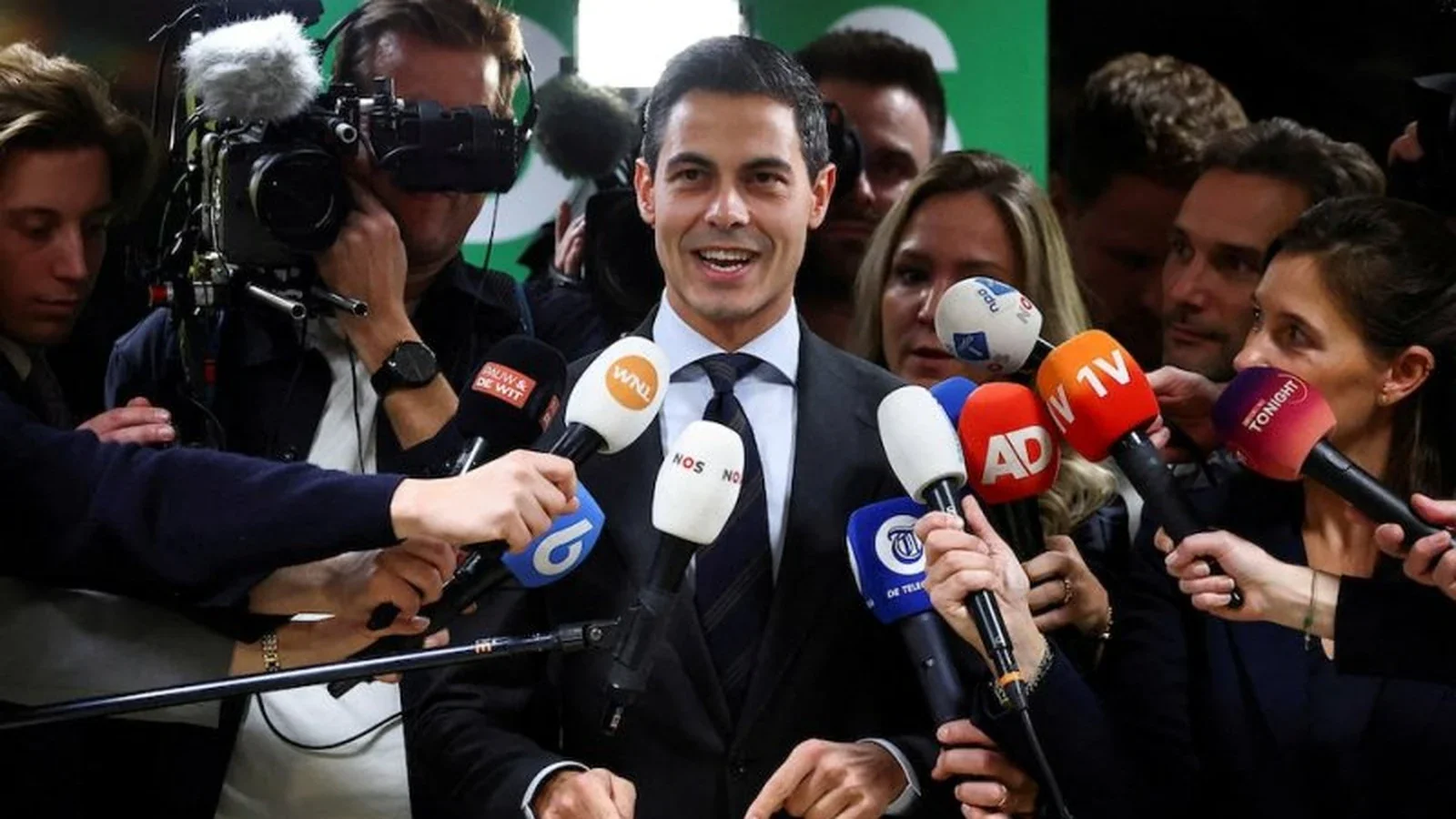
Dutch Prime Minister Rob Jetten held an hours-long crisis meeting on Friday with the senior leaders of his two coalition partners, as he sought to ease open acrimony in the three-party minority administration and stave off its collapse less than nine months into its four-year term.
Late on Friday, Jetten said the coalition partners had agreed to further talks in the coming days in a bid to salvage the administration after a bruising debate over its tax plans. The coalition survived the marathon session, which lasted more than seven hours, but Jetten and his partners have yet to agree on the specifics of how they will work together going forward. Talks are set to continue over the weekend.
The already fragile unity in Jetten's Cabinet took a hit this week when lawmakers from his centrist D66 party and the centre-right Christian Democrats, the CDA, agreed to amendments proposed by two centre-left opposition parties, PRO and Volt, to push a tax package through the Dutch parliament in a tight vote on Thursday night after a daylong debate.
The tax plan was approved with 76 votes against 74, the narrowest possible majority, with several smaller parties joining the left and the two ruling members. The government subsequently defeated a no-confidence motion, but the developments brought a rift in the coalition out into the open.
The millionaire tax that split the coalition
The terms of the deal enraged the coalition's third partner, the right-wing, pro-business People's Party for Freedom and Democracy, the VVD. PRO's leader Jesse Klaver repeatedly called part of the agreement a millionaire's tax, and VVD lawmakers voted against their own government's tax plan.
VVD parliamentary leader Ruben Brekelmans told reporters that it was disconcerting how coalition partners had acted. VVD leader Dilan Yesilgoz, also the country's defence minister, lashed out, saying the coalition would require a fundamental reset if her partners sided with the opposition.
The wealth tax amendment proposed cutting income tax and replacing it with charges on fortune, shifting the basis for a huge share of tax revenue from income to wealth. It would cut tax on returns up to 60,000 euros a year to 35.5 percent from 36 percent, and raise it to 38 percent for returns beyond that figure.
Jetten skipped a European leaders' summit in Ireland to attend Thursday's debate in parliament about the tax measures. After the vote he said he would call his two vice premiers, one each from the CDA and VVD, for a meeting on Friday morning as he sought to hold the coalition together.
A minority government on thin ice
Jetten's three-party coalition holds 66 seats in the 150-member Tweede Kamer, the lower house. His centrist D66 is the single largest party with 26 seats, joined by the VVD with 22 seats and the CDA with 18 seats. The government came to power in February, 117 days after a snap election in October last year.
Jetten, who became in February the youngest prime minister in Dutch history, saw his D66 party emerge as the surprise winner of the last election on the back of a polished and optimistic campaign. A break with the VVD would likely be the end of the minority government.
The tax plan will now go to the senate. The administration had been trying to gather support to pass the tax plan for the coming year, failure of which would have led to the freezing of funds and the effective suspension of the treasury. Whether the weekend's further talks produce a workable fresh start will decide if the government survives its first year.