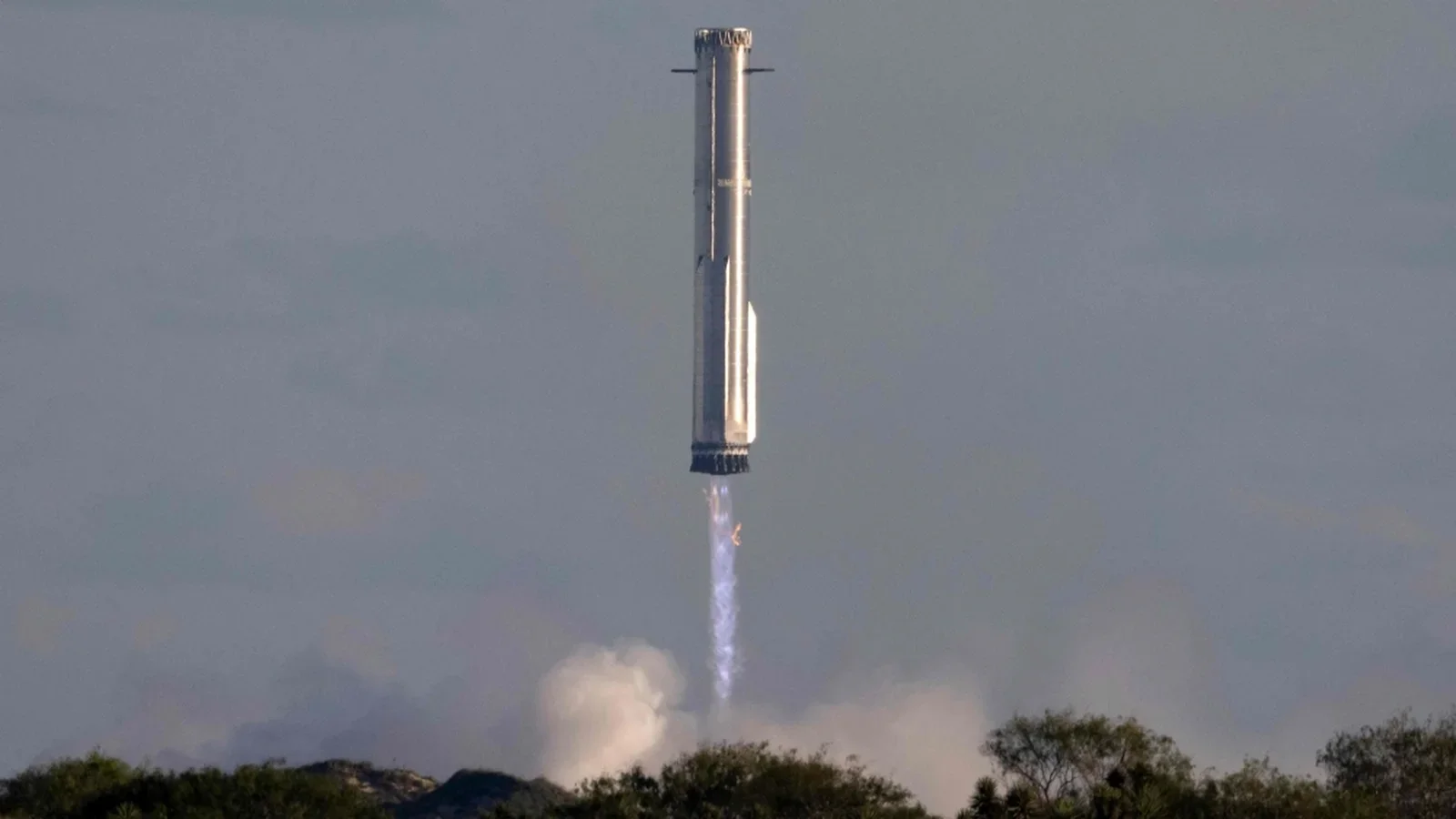
After liftoff and the mid-air separation of the two stages, an issue with the Super Heavy booster forced SpaceX to divert it to an offshore splashdown, scuttling what would have been a groundbreaking twin capture of both components. A fireball erupted as the booster fell into the Gulf of Mexico near the launch site, with a section left sticking out vertically afterward. The booster briefly hovered before exploding above the water, according to Business Today.
SpaceX did not immediately say what triggered the abort. "Not sure right now why we weren't able to bring it back," SpaceX's Dan Huot said during the company's coverage of the flight. The malfunction triggered an automatic abort, diverting the booster from its planned return trajectory towards Starbase, where the launch tower's giant mechanical arms, known as chopsticks, were waiting to catch it.
Flight 15 was a significant test for the Super Heavy programme, as it marked the first attempt by the V3 version of the booster to return for a tower catch. SpaceX had successfully caught the Super Heavy booster at its launch tower on three previous occasions, with the last successful recovery taking place in March 2025.
Ship reaches orbit and deploys satellites
Despite the setback, the upper stage, known as Ship 42, continued its flight and reached orbit approximately 27 minutes after liftoff. It subsequently began deploying 26 Starlink satellites, marking the second time Starship has carried operational satellites into orbit. Ship 42 reached low Earth orbit at about 275 kilometres, only the second time a Starship upper stage has reached orbit.
"Starship and its heatshield are healthy as the vehicle continues to orbit Earth," SpaceX said around seven hours after the mission started. The company said it was not tracking any issues with the vehicle or with the range for its return, and that everything continued to look good.
SpaceX planned for the upper-stage spacecraft to complete 14 orbits around Earth before returning approximately 22 hours after launch. The company aims to guide the vehicle back to its Texas launch tower for a controlled descent, using the mechanical arms to catch it. A successful recovery would mark a significant milestone in SpaceX's efforts to develop a fully reusable orbital rocket system, and would be the first catch of a second stage.
What the mission means for the Moon and Mars
Both stages of Starship are designed to be reusable, potentially reducing launch costs and allowing SpaceX to conduct missions more frequently. Full reusability is central to the company's plans to expand its Starlink internet network and support future space exploration, including missions to the Moon and Mars.
NASA has committed approximately 3.2 billion dollars towards Starship's development as a lunar lander for the Artemis programme, while SpaceX has invested at least 15 billion dollars of its own funds, according to Business Today. The spacecraft was expected to be visible from India in the early hours of Saturday, passing over Indian airspace several times during its 22-hour flight.
If safety concerns arise during the final approach, SpaceX's mission team has the option of ending the flight early and sending the second stage down to a controlled ocean splashdown instead of attempting the catch.