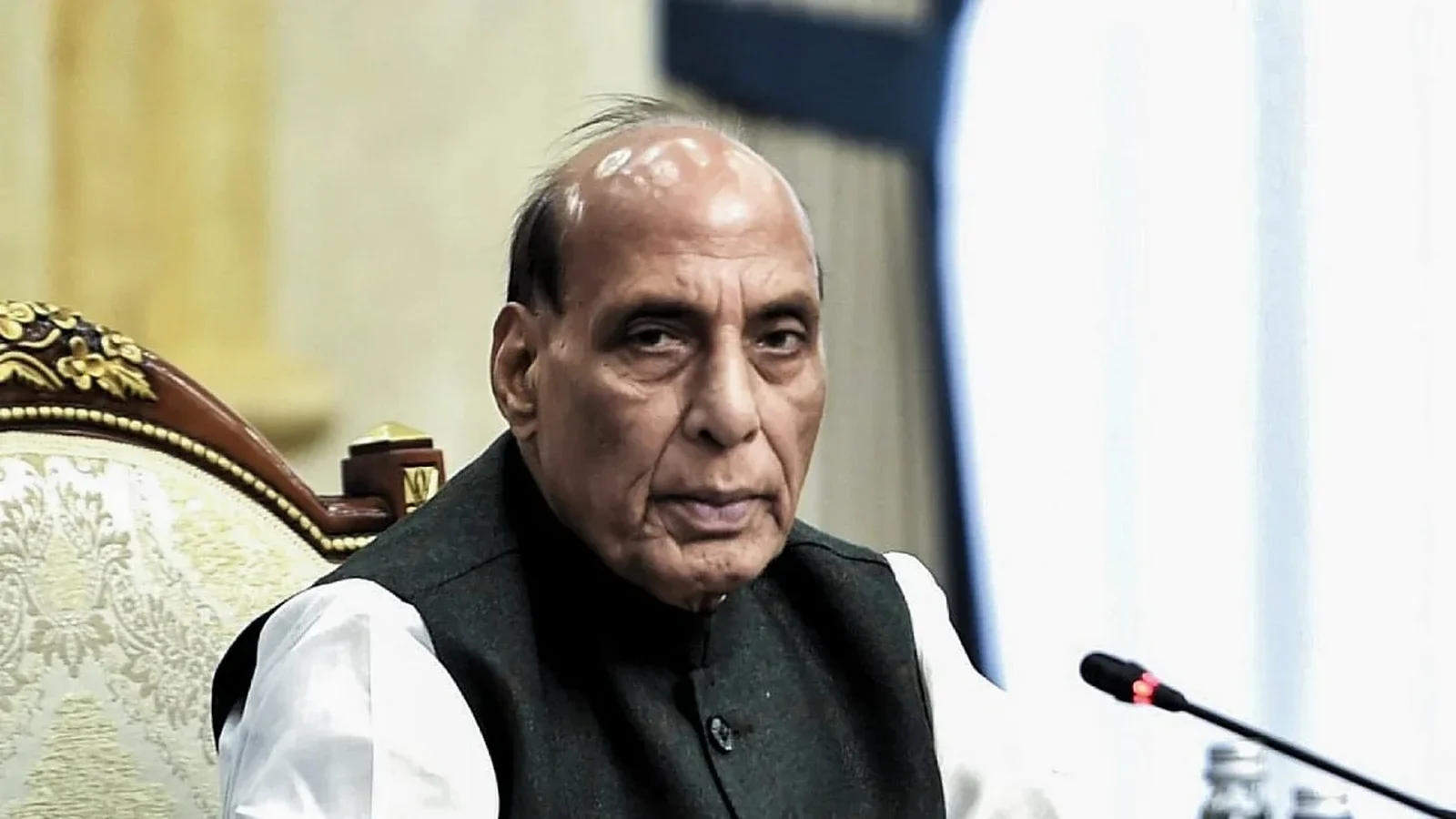
The three-day conference is organised by the Indian Society for Non-Destructive Testing in Hyderabad, Telangana, and has brought together over 2,000 professionals, researchers, industry experts and students, according to the defence ministry.
Singh called for making India not merely a user of advanced technologies, but also a developer, innovator and global leader in critical domains, and stressed strengthening the country's non-destructive testing (NDT) ecosystem for better preparedness and self-reliance.
On indigenous capability, he said: "We must strengthen our indigenous capabilities in advanced inspection technologies, specialised sensors, evaluation equipment and associated software." He added: "Developing domestic capabilities in these areas is essential for reducing technological dependencies and securing critical defence supply chains. We must promote consistent quality assurance practices across the entire defence industrial ecosystem."
No compromise on testing integrity
He asserted there can be no compromise on the integrity of testing results in strategic applications, and said: "We must ensure that inspection results are accurate, reliable and traceable, and are based on robust procedures and appropriate standards followed by assessment by qualified professionals."
On why testing matters, he said: "Hidden defects can affect operational availability, increase maintenance requirements, reduce the service life of equipment and, in critical situations, jeopardise mission success. We need to move beyond a culture of merely identifying defects towards actively preventing them by embedding quality at every stage of the manufacturing process."
He said NDT techniques examine the integrity of materials, components and structures without causing damage, just as ultrasound and X-rays examine the human body without surgical intervention.
AI and digital tools reshape inspection
On new tools, he said artificial intelligence, machine learning, robotics, advanced sensors, digital twins and predictive analytics are significantly expanding inspection and structural health monitoring, improving speed and consistency and finding patterns conventional methods may miss.
He said India's pursuit of Aatmanirbharta (self-reliance) in defence is not merely an economic objective but a strategic necessity, and called on India to develop indigenous solutions tailored to its strategic and industrial requirements, with investment in research, advanced equipment, software and skilled manpower. He said public sector undertakings, private manufacturers, start-ups and MSMEs have an important role to play, and that in defence applications including missiles, aircraft, naval platforms and spacecraft, quality is essential to operational reliability and national security.