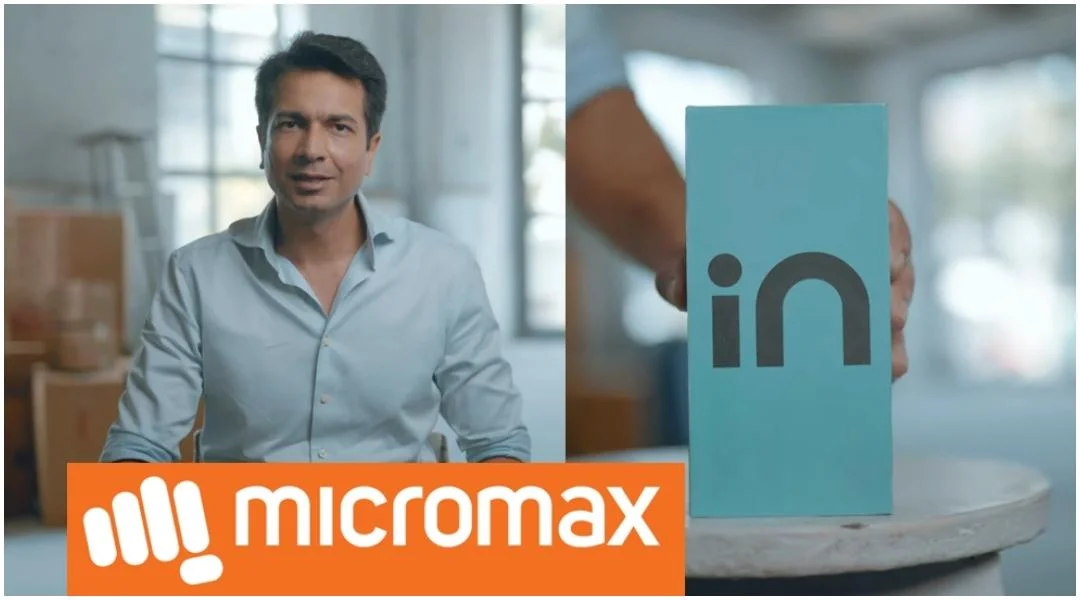
Micromax, the Indian smartphone brand that once challenged Samsung and Chinese manufacturers in the domestic market, could be preparing for a comeback.
Co-founder Rajesh Agarwal expressed his ambition to relaunch Micromax while speaking at the Network18 Rising Bharat Summit: North Edition in Lucknow on Tuesday, November 17. He said the relaunch would focus on artificial intelligence, improved product design, software capabilities and Made-in-India manufacturing.
"We have two companies today. One is Micromax, which is a brand company. Another is Bhagwati Products Limited, which is an EMS company. Both businesses are equally lucrative but if you really ask me where my heart lies, my heart lies in launching Micromax again," Agarwal said.
He has not announced a launch date, smartphone models or pricing for the proposed comeback. The company is working with design partners as it evaluates the next phase of its business.
AI and software to lead the relaunch
Agarwal indicated that a potential Micromax relaunch would focus on delivering a differentiated smartphone experience rather than relying solely on traditional marketing, distribution and sales strategies.
Artificial intelligence and software capabilities are expected to play an important role in the company's future plans. He said the company was exploring improvements in its user interface and user experience, with AI-powered features expected to offer consumers a different smartphone experience.
The emphasis on software marks a shift from the brand's earlier playbook, which leaned heavily on pricing and distribution to win buyers in the budget segment.
Micromax last launched a smartphone in 2022 and then quietly exited the market. In October this year, the company confirmed to The Economic Times that it was working on plans to re-enter the smartphone market, with a focus on phones priced below Rs 20,000, Navbharat Times reported.
Why Micromax lost its position
Reflecting on the brand's decline, Agarwal said Indian smartphone manufacturers struggled to compete with Chinese companies because of the latter's established component supply chains, manufacturing ecosystem and product design capabilities.
He explained that Chinese manufacturers had developed a strong ecosystem covering components, research and development and smartphone design, something Indian brands were unable to replicate at the time.
The challenge was not limited to Micromax, as several homegrown smartphone brands also lost ground to international competitors through the late 2010s.
Agarwal believes the situation is changing, with government initiatives, industry investments and a growing focus on domestic electronics manufacturing creating fresh opportunities for Indian companies.
A window in the budget segment
The comeback ambition comes at a time when Chinese brands have moved upmarket, leaving the sub-Rs 20,000 segment more open. Popular phones from Xiaomi, Realme, Oppo and Vivo now mostly sit in the Rs 30,000 to Rs 40,000 range, while the cheaper devices left behind are largely 4G or older models.
Indian brands are already moving into the gap. Counterpoint Research estimates their combined market share rose to 7 percent in the July to September quarter, from 2 percent a year earlier, the highest since the December quarter of 2018, with Lava and Ai+ accounting for almost 95 percent of the contribution from Indian brands.
The government has introduced the Rs 62,500 crore Mobile Phone Manufacturing Scheme, which aims to strengthen domestic manufacturing, support Indian-owned smartphone brands and improve local design and research capabilities. The scheme offers a 5 percent incentive for eligible Indian brands, with an additional 3 percent for Indian design and research and development.
India's mobile phone production has grown from Rs 18,000 crore in 2014-15 to Rs 6.27 lakh crore in 2025-26, making the country the world's second-largest mobile manufacturing hub after China.
Agarwal was speaking on a panel titled "Beyond Assembly: Building India's Electronics Export Engine", alongside OnePlus and Oppo R&D head Tasleem Arif, Ai+ founder and CEO Madhav Sheth and Indian Cellular and Electronics Association chairman Pankaj Mohindroo, who said India's electronics exports could reach Rs 6 lakh crore this year.