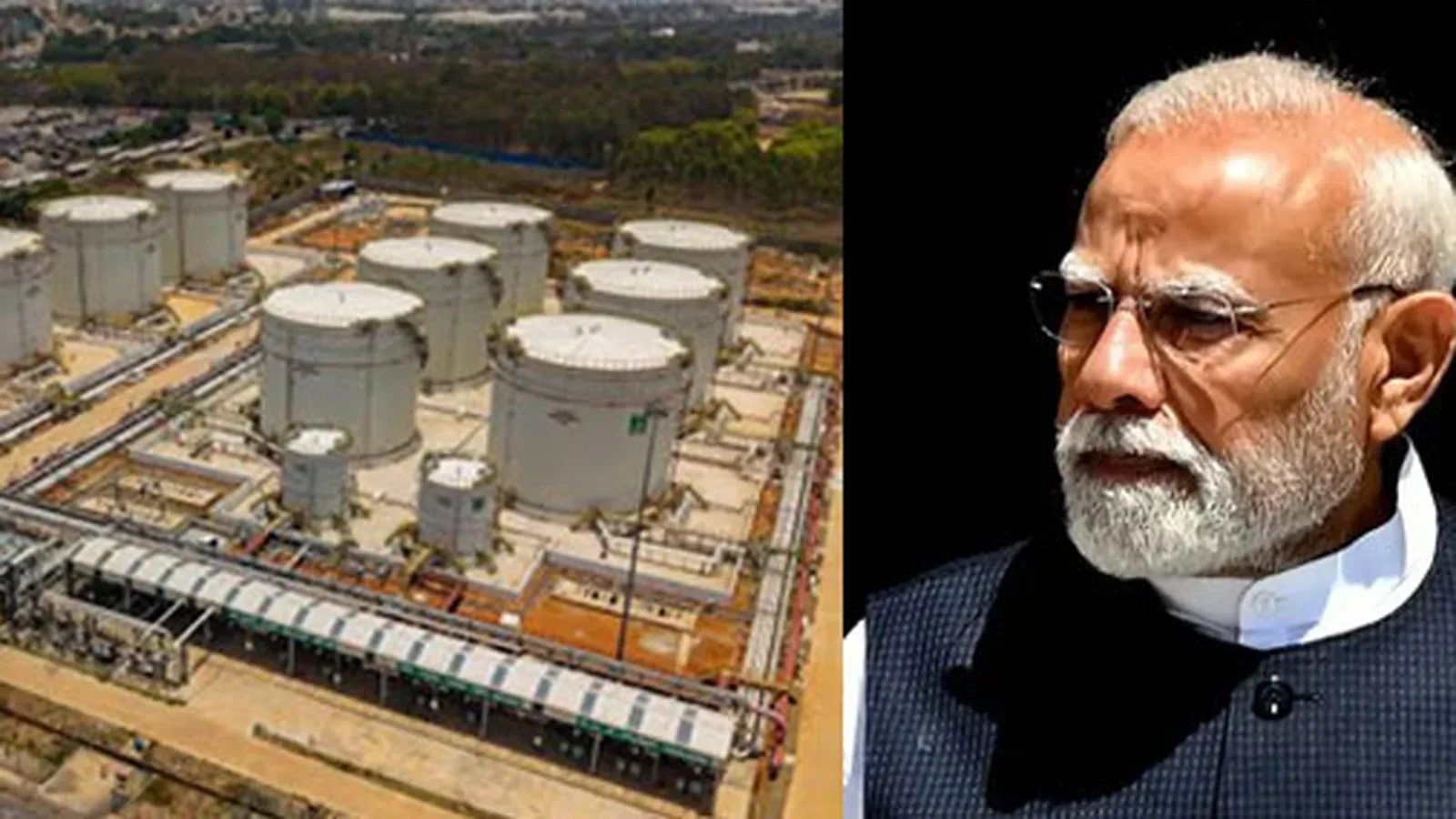
Prime Minister Narendra Modi will virtually inaugurate India's largest underground LPG storage cavern in Mangaluru on Friday, as part of projects worth Rs 15,600 crore he will inaugurate during his visit to Bengaluru and Mysuru.
The cavern, built at a cost of Rs 850 crore, has a storage capacity of 80,000 metric tonnes. It has been constructed at Bala in Mangaluru by Megha Engineering and Infrastructures Ltd for Hindustan Petroleum Corporation Ltd.
India's second underground LPG cavern
This is India's second underground LPG storage cavern and is expected to enhance energy security and ensure an uninterrupted supply of clean energy.
The facility can store six lakh barrels, equivalent to 60 million litres of liquefied petroleum. It has two separate underground chambers to hold propane and butane.
The LPG storage facility at Visakhapatnam has a capacity of 60,000 tonnes. With a stated capacity of 80,000 metric tonnes, the Mangaluru facility is the largest underground LPG storage cavern of its kind in the country.
Built deep underground
The underground cavern has an elaborate tunnel network, with a 1,083-metre access tunnel, upper and lower water curtains measuring 578.2 metres and 804.31 metres, and connecting tunnels spanning 486.2 metres.
The two main storage caverns are located at depths of 220 metres and 225 metres, while the vertical shaft extends to 164.1 metres. Construction began in 2019, and a large rock formation was excavated nearly 500 metres below ground level to create the tunnels.
The project has cleared all tests. The construction company announced the successful completion of the project on June 6 and released a detailed video of the facility on October 31.
Mangaluru's energy storage hub
Mangaluru already has two underground oil storage facilities, one at Permude with a capacity of 1.5 lakh metric tonnes and another at Padur with a capacity of 2.5 lakh metric tonnes.
The LPG storage cavern is expected to help meet India's growing demand for clean fuel and strengthen the country's ability to withstand disruptions in energy supplies.