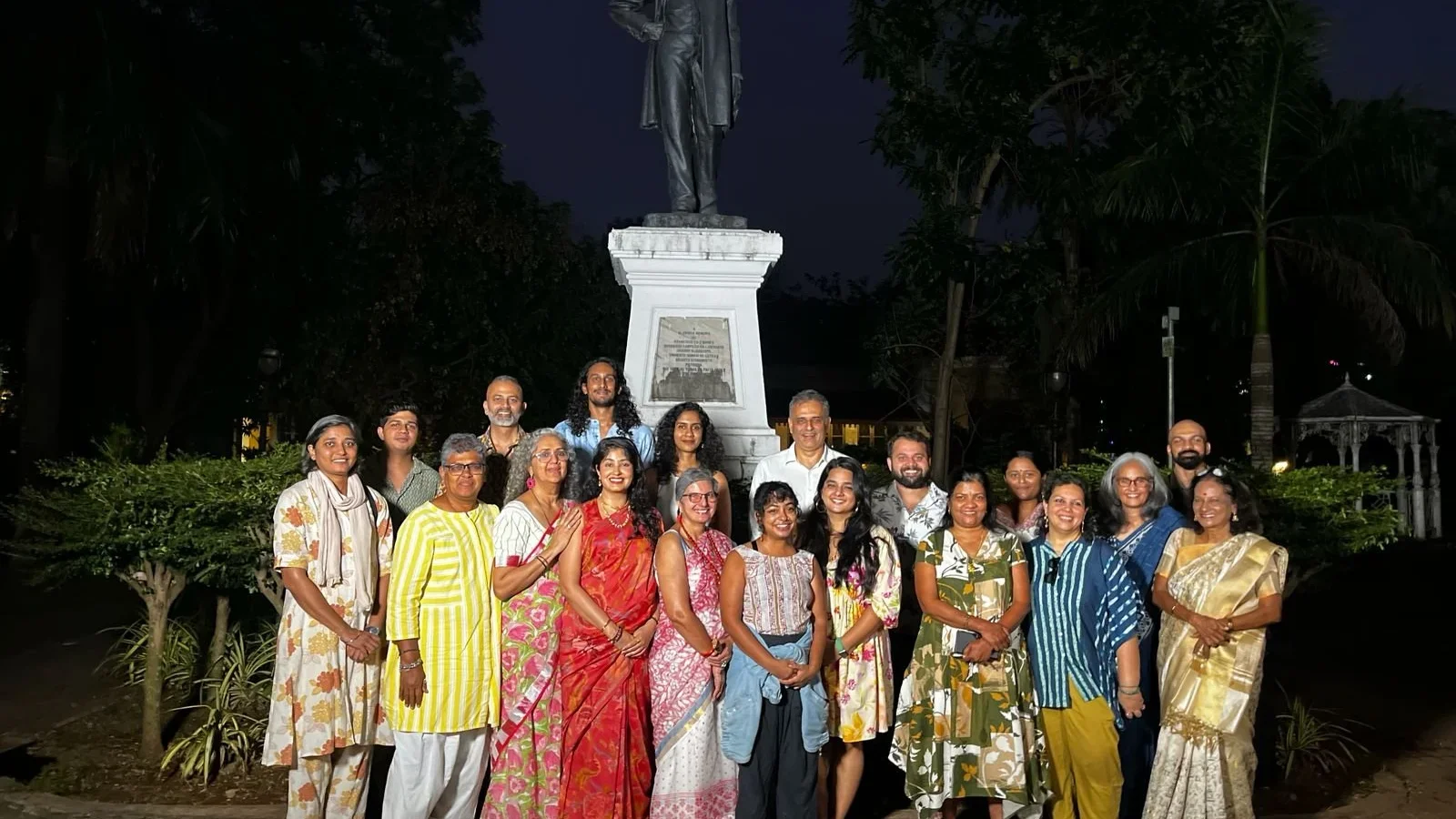
The Heritage First Festival, celebrating Goa's rich history, culture, traditions and architectural legacy, was inaugurated at FL Gomes Garden in Campal, Panaji, on Saturday, bringing together historians, cultural experts and heritage enthusiasts.
Organised by the Heritage First Goa (HFG) Education and Learning Foundation, the festival features 47 heritage walks and workshops across Panaji, Assolna, Benaulim, Old Goa, Mapusa and Margao. The programme will continue until 6 December, offering participants an opportunity to explore Goa's lesser-known historical, cultural, social and natural heritage.
Documentary filmmaker and ethnomusicologist Nalini Elvino De Sousa and historian Professor Sushila Sawant Mendes attended the inaugural function as guest speakers. The festival aims to encourage greater public participation in heritage conservation while creating awareness about the importance of safeguarding Goa's unique cultural identity amid rapid social and urban transformation.
Introducing the festival, Snigdha Manchanda emphasised that Goa's heritage extends beyond monuments and historical buildings to include language, cuisine, traditional crafts, community stories and everyday cultural practices. The walks and workshops are designed to reconnect residents and visitors with that living heritage.
From 32 walks to 47
The festival has grown steadily since its early editions. Manchanda highlighted its growth from 32 heritage walks in 2024 to 47 walks and workshops in 2026. The activities will be conducted by knowledgeable local guides, referred to as pilots, who will introduce participants to the history and traditions of their communities.
HFG co-founder and Panaji councillor Jack Ajit Sukhija acknowledged the support of individuals and businesses sponsoring the festival. He said 18 heritage walks had already secured sponsorship and appealed for additional support to sustain the initiative.
HFG co-founder Heta Pandit outlined the festival programme, explaining that participants would gain first-hand experience of Goa's heritage through interactions with researchers, historians and cultural practitioners who have dedicated years to documenting the state's traditions.
Remembering Goa's people
Professor Mendes highlighted the remarkable contributions of Dr Francisco Luis Gomes, the distinguished Goan surgeon, writer and three-time elected member of the Portuguese Parliament. Recalling his opposition to colonial policies and advocacy for Goa, she described him as an important part of the state's human heritage.
Nalini Elvino De Sousa shared personal memories of Campal, reflecting on how neighbourhoods, people and shared experiences contribute to Goa's collective cultural identity. She stressed the importance of preserving these memories for future generations.
The festival's walks span six locations, from the capital city of Panaji to the historic churches of Old Goa and the southern towns of Assolna, Benaulim and Margao, along with Mapusa in the north. Each walk is led by a local pilot with deep knowledge of the area's history and traditions.
With heritage walks and interactive workshops running until 6 December, the festival offers residents and visitors weeks of opportunities to rediscover Goa's diverse historical and cultural legacy, one neighbourhood at a time.