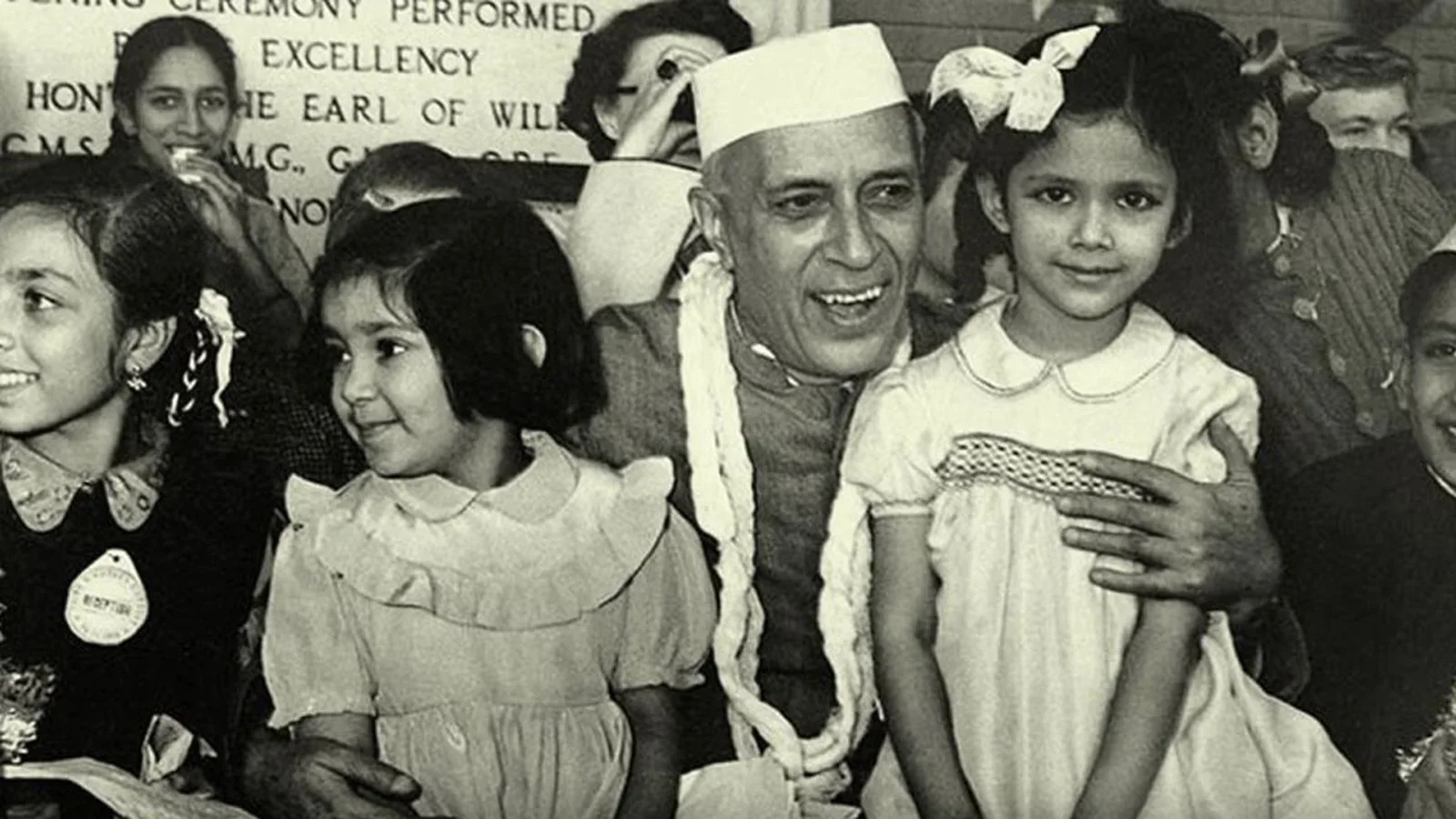
India celebrated Children's Day on Saturday, 14 November, to mark the birth anniversary of the country's first Prime Minister, Jawaharlal Nehru. Fondly remembered as "Chacha Nehru", he was known for his deep affection for children and his strong belief in the power of education.
Nehru was born on 14 November 1889 in Allahabad, now known as Prayagraj in Uttar Pradesh. He believed that children play a vital role in the rise of a country, and once said that the way children are brought up in a country determines its future. The day, also known as Bal Diwas, celebrates his vision for children's education and well-being.
Prime Minister Narendra Modi paid tribute to Nehru on his birth anniversary on Saturday, as the country marked Children's Day. Defence Minister Rajnath Singh also posted tributes, and leaders across states joined school celebrations and greeted children on the occasion.
Schools and educational institutions across the country marked the day with cultural programmes, competitions, games, special assemblies and other activities dedicated to children. Students took part in fancy dress competitions, storytelling sessions and poetry recitations, while teachers shared Nehru's vision for the youth in morning assemblies.
Why India celebrates on 14 November
Previously, Children's Day was celebrated in India on 20 November, the day World Children's Day is celebrated globally by the United Nations. However, after the death of Pandit Jawaharlal Nehru in 1964, Parliament issued a resolution to establish his birthday as the official Children's Day in the country.
Since then, India has celebrated Children's Day on 14 November to commemorate the birth anniversary of its first Prime Minister. World Children's Day continues to be observed internationally on 20 November each year.
The day aims to promote children's rights, health, education and overall development. The annual celebration also highlights the importance of providing a safe and nurturing environment for children to grow, and recognises the importance of childhood and the need to protect children's rights and welfare.
UNICEF's 2026 campaign for the day carries the theme "My day, my rights, my future". The campaign urges adults and policymakers to listen to children and raise new protections for privacy, inclusion and safety, as artificial intelligence becomes more widespread in children's lives.
Celebrations across the country
Beyond stage performances, schools organised games and sports to give students a welcome break from their studies while encouraging physical fitness. Many campuses transformed into lively carnivals, complete with game stalls, prizes and festive treats, in an atmosphere meant to spark teamwork and joy.
In Guwahati, students took part in a fancy dress competition as part of Children's Day celebrations. In Mumbai, children offered floral tributes to a portrait of Nehru on his birth anniversary, marking the day with quiet respect alongside the festivities.
Children's Day is not a gazetted national public holiday in India, and since 14 November fell on a Saturday in 2026, some schools organised their programmes on the preceding school day. Families and schools also used the day to share gift ideas, speech templates and quizzes, helping run inclusive, low-cost celebrations.
The day's message remains the one Nehru himself championed: that children are the country's future, and that their education, health and happiness deserve the nation's full attention.