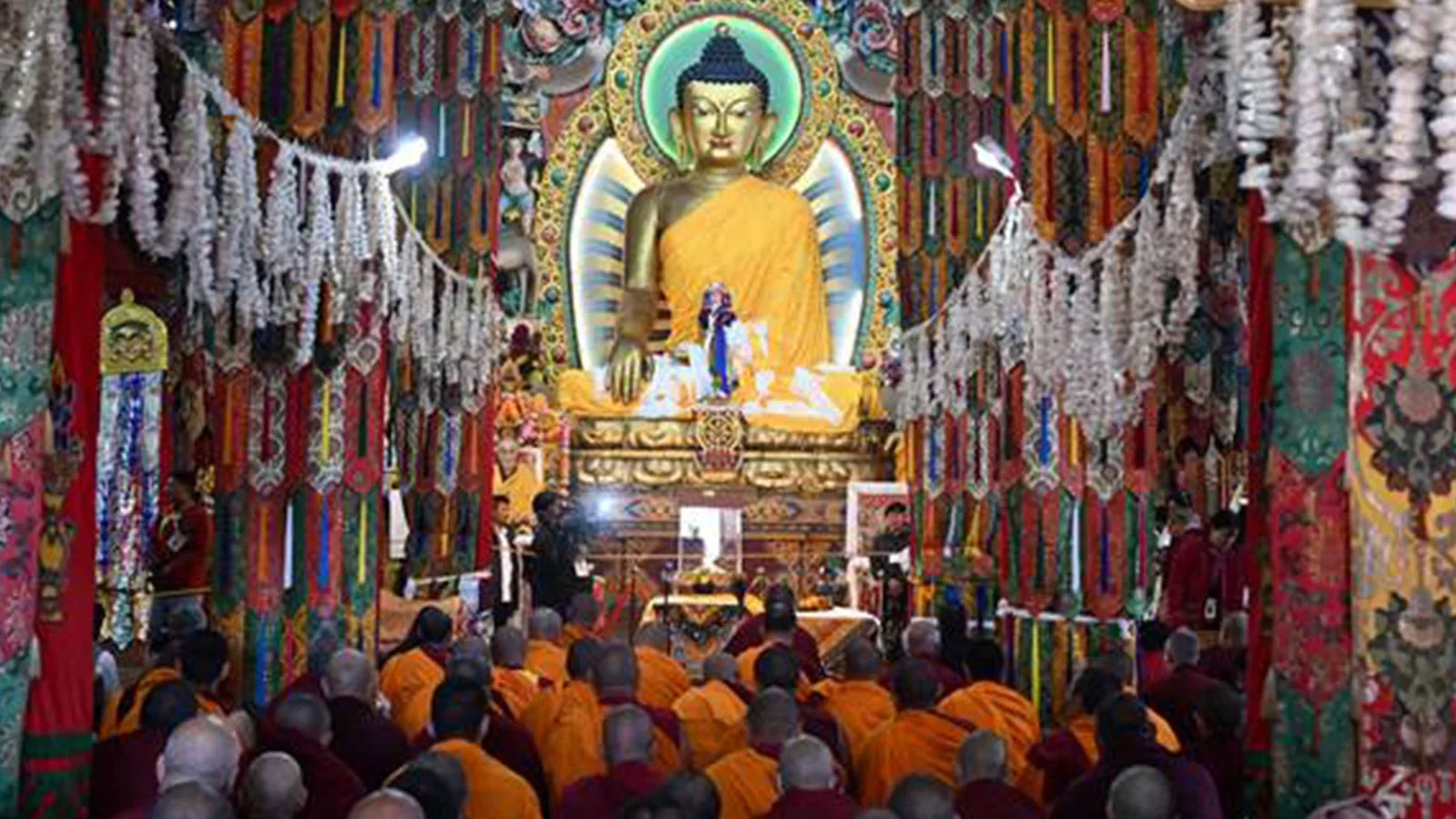
The sacred relics of Shakyamuni Buddha have arrived at the Golden Pagoda in Namsai, Arunachal Pradesh, for the final leg of their exposition in the state. Public darshan opened on Saturday, 14 November, and will continue until 20 November, after which the relics return to the National Museum in New Delhi on 21 November.
Nearly 50,000 devotees so far
The exposition has drawn large numbers of devotees. Nearly 50,000 devotees had visited the exposition across Arunachal Pradesh within the first two weeks, according to an official statement issued on 12 November. The response at each venue has been described by the organisers as overwhelming.
The exposition commenced at Gaden Namgyal Lhatse Monastery, known as Tawang Monastery, on 31 October and concluded there on 7 November. The relics then moved to Thubchog Gatsel Ling Monastery, also known as Lower Gompa, in Bomdila, where they arrived on 8 November and remained for public darshan until 13 November.
At Bomdila, 11,969 devotees visited the monastery during the first two days of the exposition alone. The darshan timings on scheduled days are from 8:30 AM to 6:00 PM, and the relics received a ceremonial send-off from Bomdila on Saturday morning for their onward journey to Namsai.
A journey by road, air and helicopter
The movement of the relics across Arunachal Pradesh has involved road, air and helicopter legs, with the Indian Air Force transporting them between venues. The timings and movement arrangements remain subject to operational, weather and security considerations, according to the Press Information Bureau.
After the conclusion of public darshan at Namsai, the relics are scheduled to return to the National Museum in New Delhi on 21 November, via Tezu Airport and Air Force Station Palam. The return journey will close an exposition that has taken the relics to three districts of the state over three weeks.
The exposition coincides with Lhabab Duchen, an important festival in the Tibetan Buddhist tradition that commemorates Lord Buddha's descent from the heavenly realm. The timing has added to the significance of the exposition for Buddhist communities in the region.
Relics from Piprahwa, discovered in 1898
The relics being taken to Arunachal Pradesh originate from Piprahwa in present-day Siddharthnagar district, Uttar Pradesh, an archaeological site associated with ancient Kapilavastu and the Shakya tradition of Lord Buddha. The Piprahwa stupa was excavated in 1898, and the relics found there are among the most venerated objects in the Buddhist world.
Public expositions of the relics on this scale are uncommon, and the Arunachal Pradesh exposition has given devotees across the state an opportunity to pay homage that would otherwise require a journey to New Delhi. The final leg at Namsai, in the eastern part of the state, extends that opportunity to Buddhist communities in a region the relics had not previously visited.
With veneration at Namsai scheduled through 20 November, thousands more devotees are expected to pay their respects in the remaining days of the exposition.