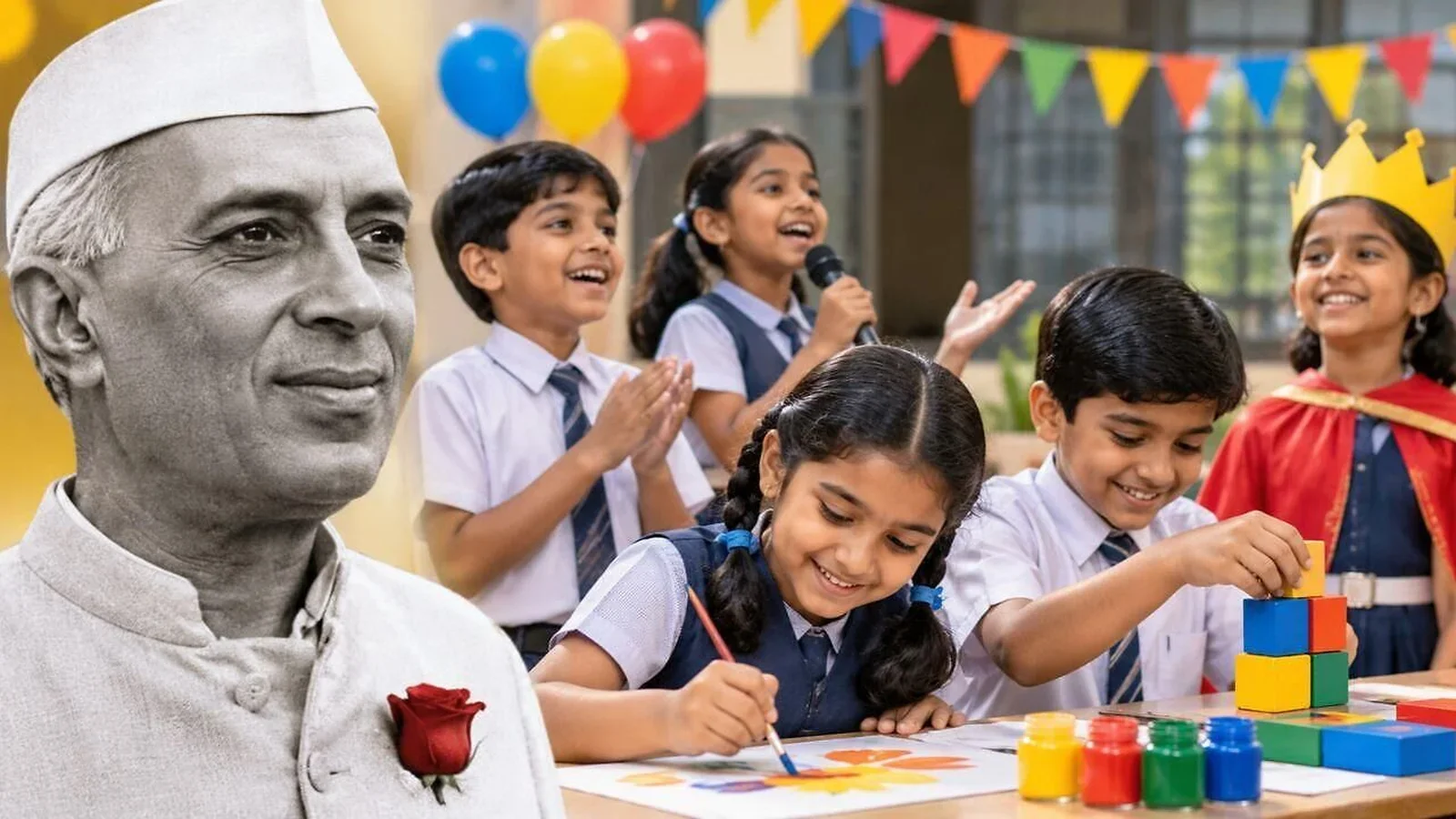
Nehru was born on 14 November 1889 in Prayagraj, then known as Allahabad. He served as Prime Minister from 15 August 1947 until his death on 27 May 1964, and his affection for children earned him the name Chacha Nehru. His birthday is celebrated as Children's Day to honour his belief that children are the future of the nation.
Prime Minister Narendra Modi paid tribute to Nehru on Saturday in a post on X, writing, "Paying tribute to former PM Pandit Jawaharlal Nehru on his birth anniversary." Defence Minister Rajnath Singh also paid homage, recalling Nehru's contribution to India's freedom struggle and his leadership during the early years of independent India.
Rajnath Singh wrote that Nehru's contribution to the freedom struggle and his leadership as the first Prime Minister of independent India "left an enduring imprint on the formative years of our nation". The tributes from the Prime Minister and the Defence Minister were among the first of the day, and leaders across party lines followed through the morning.
Tributes across party lines
Leader of Opposition in the Lok Sabha Rahul Gandhi also paid tribute to Nehru, describing him as the "jewel of India" and recalling his vision of India as an idea built on diversity, democracy and equality. Congress president Mallikarjun Kharge, former Congress president Sonia Gandhi and senior leader Ashok Gehlot paid floral tributes to Nehru at Shanti Van in New Delhi.
Uttar Pradesh Chief Minister Yogi Adityanath extended greetings on Children's Day, saying that children are the future and highlighting the commitment of the state and central governments to empowering young minds through quality education, safety and equal opportunities.
Kerala Chief Minister V. D. Satheesan and his cabinet colleagues also paid tributes to Nehru and extended Children's Day greetings. Satheesan stressed the need to work for children's education, health, safety and future, and said no child should face cruelty, hunger, pain or neglect.
The 2026 theme: children's rights in a digital age
UNICEF's 2026 theme for the day is "My day, my rights, my future", which urges adults and policymakers to listen to children and raise new protections for privacy, inclusion and safety as artificial intelligence becomes more widespread. The theme places children's voices and their safety in a digital age at the centre of the year's observance.
The focus on digital safety reflects a growing concern about children's exposure to screens, smartphones and artificial intelligence from an early age. Educators and child rights advocates have argued that protections for children need to keep pace with how quickly technology is entering classrooms and homes.
Schools marked the day with activities designed around children themselves, from games and competitions to cultural performances. The celebrations are a reminder that the day belongs to children, even as it commemorates a leader who died more than six decades ago.
How 14 November became Children's Day
Before Nehru's death in 1964, India celebrated Children's Day on 20 November, in line with the United Nations, which had declared 20 November as Universal Children's Day in 1954. After his death, Parliament unanimously resolved that 14 November, his birthday, would be observed as National Children's Day, known as Bal Diwas.
The change gave India its own date for the observance, tied to a leader whose public image was closely linked to children. Nehru was often photographed with children, and his birthday became a day for schools to celebrate their students rather than a formal state occasion.
More than sixty years on, the day continues to be marked in schools across the country, and the tributes from national leaders each year underline how Nehru's legacy remains part of India's public life.