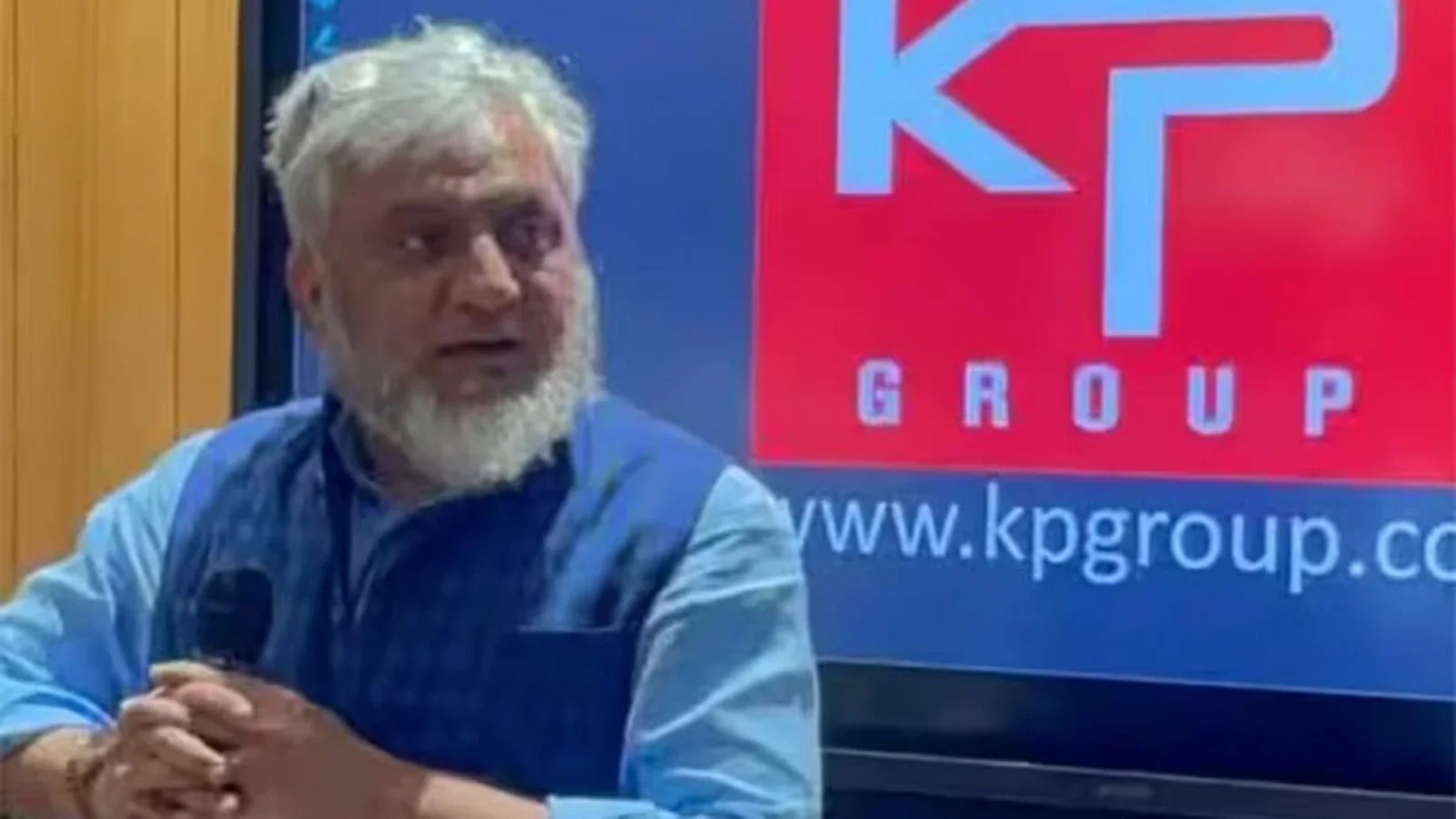
Faruk Patel was born into a financially modest family in Saladra village in Gujarat's Bharuch district on March 24, 1972. Before becoming the head of a major renewable energy business group, he worked at an optical shop, drove an auto-rickshaw and worked at Pizza Hut in the United Kingdom.
Today, KP Group has three listed companies and a combined market capitalisation of Rs 10,964 crore as of August 2026, according to a report published in October. The transformation began in 1994 with an initial capital of approximately Rs 1 lakh.
Humble beginnings in Surat
Patel's father, Ghulam Patel, belonged to a farming family and worked as a bus conductor with the Gujarat State Road Transport Corporation. In 1974, when Faruk was two years old, his father's transfer brought the family to Surat, where they settled in a small rented house.
After completing class 12, Patel did not follow a conventional career path. He worked at an optical shop, drove an auto-rickshaw, travelled to Mumbai to learn about the import-export trade, received training in textile engineering in 1990 and experimented with a small retail venture.
In 1991, he moved to the United Kingdom and joined Pizza Hut, gradually rising to the position of team leader. The experience gave him financial stability and an understanding of how organised businesses operated, but he realised that a salaried job abroad would not fulfil his larger ambition. He returned to India in 1993.
The beginning with Rs 1 lakh
Back in Surat, Patel entered the carting, material-handling and small construction business. In 1994, he formally established the foundation of what would become KP Group, operating from a small office at Fazal Tower in Adajan Patia with an initial capital of approximately Rs 1 lakh.
In the early days he was personally involved in almost every aspect of the operation. On one occasion, when a truck driver and labourers failed to turn up for a scheduled delivery at Hazira Industrial Estate, Patel drove the truck carrying bricks himself and personally unloaded the consignment, working until almost midnight.
Within six to eight months, he realised the initial business arrangement was not aligned with his long-term vision. He handed over the trucks and business assets to his partner and returned to Surat to establish a more focused corporate entity.
Telecom towers, then renewable energy
The next major opportunity came with India's growing mobile communication sector. KP Group entered telecom infrastructure, undertaking projects across 16 states over about 13 years. It completed 1,000 telecom sites within eight months in 2009 and more than 3,500 sites by 2010, laying over 900 kilometres of optical fibre cable.
After disruption in the telecom industry following the 2G spectrum controversy, Patel turned to renewable energy. A defining moment came while working on a 105 MW solar park at Charanka in Gujarat.
In 2008, he established KPI Global Infrastructure, which later became KPI Green Energy. In 2010, he founded KP Energy, marking the group's entry into wind energy, at a time when many around him questioned the move.
Three listed companies today
KP Group's three listed companies are KPI Green Energy, KP Energy and KP Green Engineering. The group reported a renewable energy portfolio of more than 9.2 GW, with a target of exceeding 10 GW by 2030.
The transition was not easy. Patel has openly acknowledged that he went through deep mental and emotional strain and a period of depression during the challenging phase, and credits faith, focus and persistence with helping him continue.
Beyond business, the group supports education, healthcare and community development through the KP Human Development Foundation. One initiative, Prabhu Nu Ghar, provides residential care for older persons with disabilities.
His advice to aspiring entrepreneurs is straightforward: "Start small but think big." He believes starting a business does not necessarily require substantial financial resources, but conviction, resourcefulness and dedication.