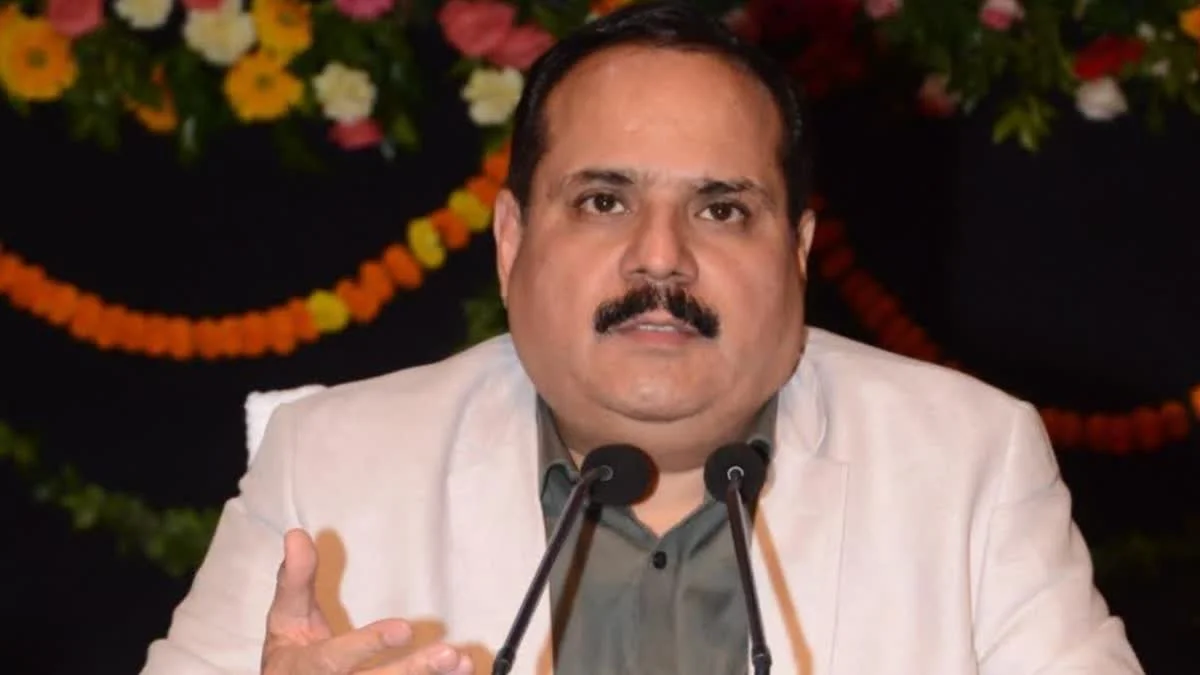
Uttar Pradesh Chief Electoral Officer Navdeep Rinwa on Tuesday said the Election Commission's database contains no information about voters' religion or caste, rejecting Chief Minister Yogi Adityanath's claim that 1.27 crore Hindu voters were missing from the state's electoral rolls after the Special Intensive Revision (SIR).
Addressing a press conference at Lok Bhavan in Lucknow, where he released the draft electoral roll for the state, Rinwa said the poll body could not officially analyse voters by religion or caste because it did not possess such information.
"If you examine our electoral rolls, they contain the voter's name, gender, and the name of their spouse; we do not maintain records based on religion, whether Hindu or Muslim. We do not categorise or process data based on religion," Rinwa said.
He also ruled out any conspiracy by the poll body, its officials or political parties to deliberately exclude members of a particular community.
What Yogi Adityanath claimed
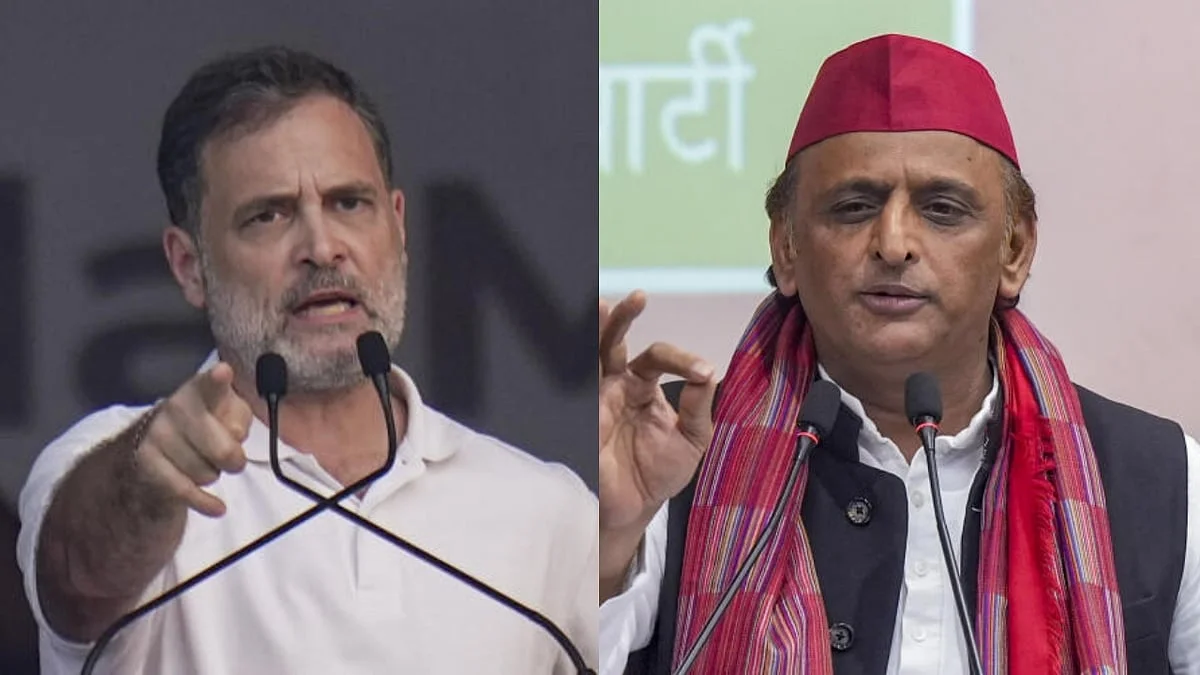
Speaking at the Aaj Tak Panchayat programme last week, Adityanath had claimed that 1.27 crore Hindu voters whose names figured in the panchayat electoral rolls were missing from the Assembly rolls, despite receiving government welfare benefits.
He also cited around 66 lakh voters whose names were allegedly absent, including about 55 lakh Hindu beneficiaries of government welfare schemes and nearly 4.5 lakh voters aged between 18 and 19. He claimed the proportion of Muslim electors had risen by 1.65 per cent after the revision.
The chief minister said the state government had submitted a memorandum to the Election Commission seeking clarification over the discrepancies between the Assembly rolls and the voter lists maintained for panchayat elections.
The claim has also raised questions within the BJP, with some leaders asking how such a gap arose when the party had deployed over 1.61 lakh booth-level agents during the revision, more than the Samajwadi Party's 1.57 lakh and the BSP's 1.54 lakh.
The draft roll in numbers
Rinwa also published the draft electoral roll for the state following the Special Summary Revision (SSR) ahead of the 2027 Uttar Pradesh Assembly election.
Uttar Pradesh now has 13,58,68,905 registered voters, including 7,38,58,510 men, 6,20,06,353 women and 4,042 voters belonging to the third gender. The draft list includes 11,83,352 voters in the 18-19 age group.
The Chief Electoral Officer separately estimated that approximately 2.58 crore residents aged 18 and above were not included in the current draft electoral roll.
The claims and objections period for the draft roll will remain open from 17 November to 16 December. Form 6 may be used to apply for the inclusion of a name, Form 7 for the removal of a name, and Form 8 for corrections. Claims will be disposed of by 28 December, and the final electoral roll is scheduled to be published on 4 January 2027.
How the SIR changed the rolls
The SIR in Uttar Pradesh began on 27 October 2025 and concluded on 10 April 2026, covering all 75 districts and 403 Assembly constituencies. The exercise involved house-to-house enumeration to verify existing entries and identify ineligible voters.
According to figures released by the Election Commission, the state's electorate fell from around 15.44 crore before the revision to 13.39 crore in the final rolls published on 10 April 2026, a net reduction of approximately 2.04 crore names. The exercise also resulted in the addition of 84.28 lakh voters following the claims and objections process.
The BJP has planned a booth-level enrolment drive to restore missing voter names, with a voter-tracing exercise set to begin on 20 November, ahead of the 2027 Assembly elections.