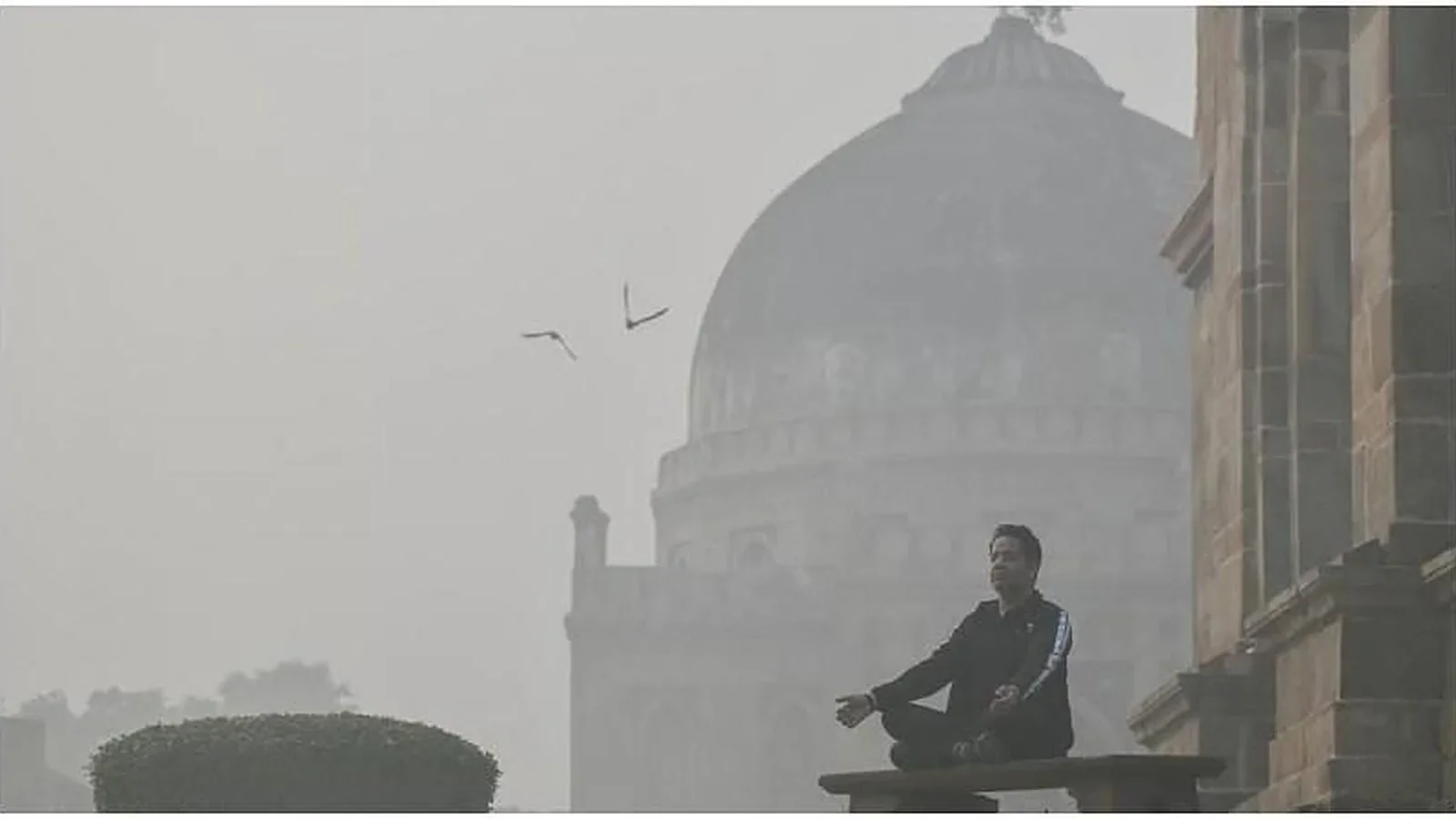
The citywide average hid far worse conditions at individual stations. Out of 58 active monitoring stations tracked by the Central Pollution Control Board, 33 slipped directly into the severe zone, where air pollution poses serious health risks even to healthy people.
IIT Delhi recorded the highest reading in the city at 487, close to the 500 ceiling of the index. North Campus recorded 476 and ITO recorded 453, while major traffic corridors and residential areas including Chandni Chowk also logged readings well above 450.
The morning had begun with similar readings. Telangana Today reported an overall AQI of 349 at 8 am, with PM2.5 and PM10 continuing as the major pollutants across the city.
GRAP Stage III curbs in force
With air quality fluctuating between very poor and severe, the Commission for Air Quality Management activated Stage III of the Graded Response Action Plan across Delhi-NCR. The measures include an immediate suspension of all non-essential demolition and construction work to curb dust pollution.
Strict bans now apply to the entry of older, high-emission commercial diesel vehicles of BS IV standard and below into the capital. Authorities have also been directed to intensify road sweeping and water sprinkling across the city.
Public health guidelines advise vulnerable groups, including children, the elderly and people with chronic respiratory or cardiac conditions, to minimise outdoor exposure and use masks when they step out.
The crisis is driven by a combination of seasonal factors. Stubble burning in neighbouring states, low temperatures, light winds of 10 to 15 kmph and morning temperature inversions have trapped polluted air close to the ground, while vehicle exhaust, construction dust and local biomass burning add to the load.
Rain may bring brief relief on Sunday
The India Meteorological Department has forecast a possible change in the weather pattern that could offer temporary relief. A developing western disturbance is expected to bring partly cloudy skies, mist and the possibility of very light rain or drizzle to isolated areas.
Meteorologists caution that any improvement from the rain is likely to be short-lived. Sustained relief depends on consistent high-speed winds rather than transient weather shifts, and the air quality is expected to remain in the very poor category over the coming days.
Friday was Delhi's first severe day of the season, with the average AQI reaching 403 in the morning before improving to 373 by the afternoon. Saturday's reading of 348 shows the city is still hovering near that threshold, with localised conditions far worse than the average suggests.
For residents, the smog has become a daily feature of the winter. Visibility stays low through the morning, traffic moves slowly through the haze, and the city's monitoring stations continue to record some of the worst air in the country.