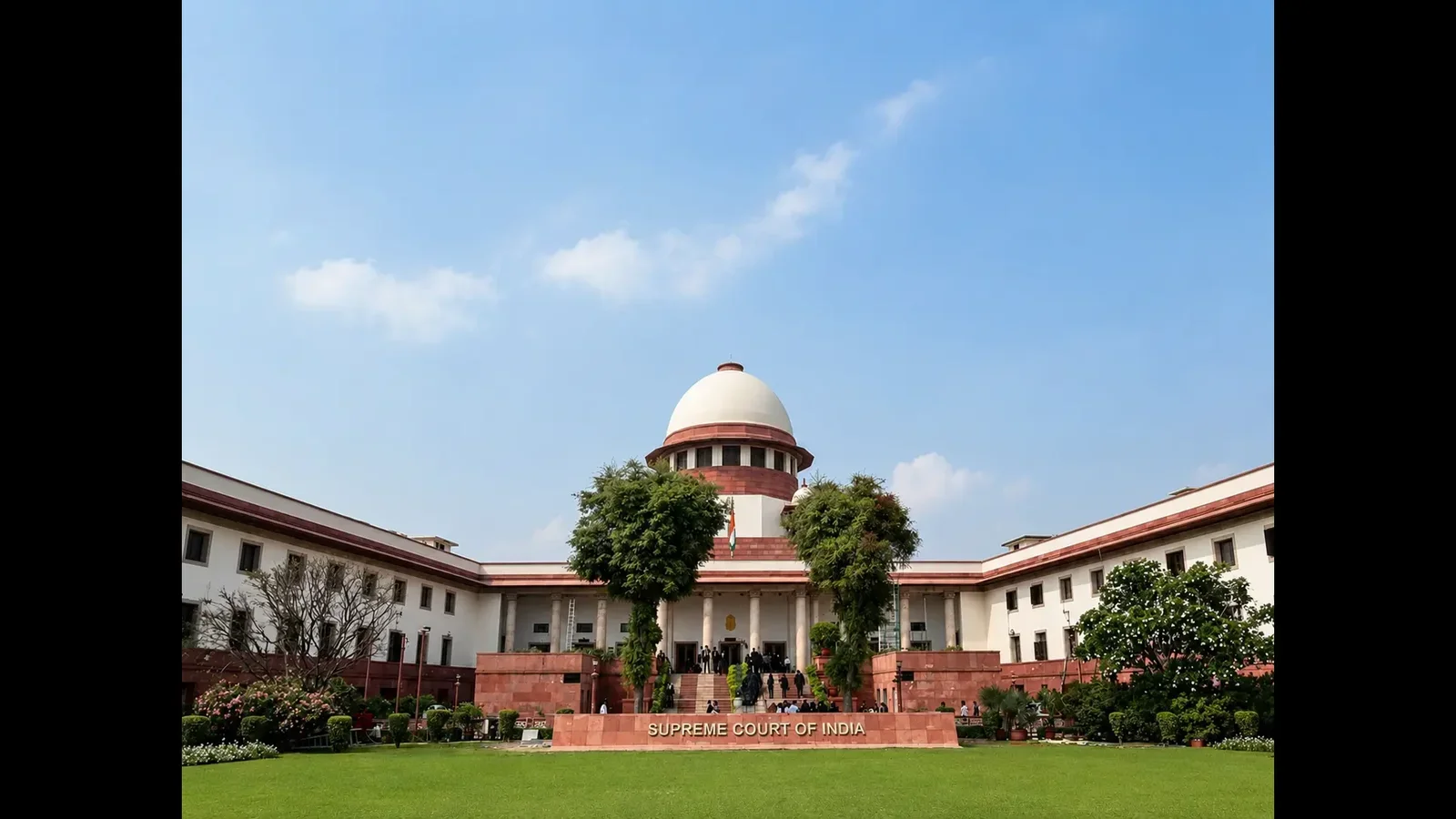
The Supreme Court has flagged the sharp rise in vehicular emissions in Delhi-NCR and directed Delhi, Uttar Pradesh, Haryana and Rajasthan to file detailed responses within two weeks. The order was passed on 6 November and reported on 10 November, according to a report by The Economic Times.
A bench of Chief Justice Surya Kant and Justices Joymalya Bagchi and V Mohana is hearing a suo motu case on air pollution in the National Capital Region. The bench said the rise in vehicular emissions warrants urgent attention.
The court directed the four governments, along with the Municipal Corporation of Delhi and Delhi Police, to explain the steps they are taking to prevent the entry and operation of over-age, end-of-life and non-compliant vehicles in the region.
It also asked for details on existing enforcement, on the enforcement of pollution-under-control certification, and on the regulatory framework for commercial and private vehicles, including vehicles coming from neighbouring states.
What the court wants to know
The states must also respond to suggestions made by the Commission for Air Quality Management and by the amicus curiae in the case. The amicus curiae is a lawyer appointed by the court to assist it in the matter.
The court further asked the governments to set out short-term and long-term measures they plan to take. The responses are due within two weeks of the order, and the matter is listed next on 23 November.
No new ban was announced in the order. The direction is for the governments to file their plans and for the court to examine them at the next hearing, rather than for an immediate prohibition.
The scale of the problem
A report by the Commission for Air Quality Management, cited in the proceedings, says vehicular emissions are the single-largest source of pollution in the NCR. They account for about 23 percent of pollution in winter and about 19 percent in summer, according to the report.
That finding puts vehicles at the centre of the pollution debate in the capital region. Construction dust, industrial emissions and stubble burning all contribute, but vehicles are the largest single source by the commission's assessment.
Stubble-burning incidents had declined substantially, according to data for 21 October to 3 November placed before the court. The decline makes the vehicle share of the problem more prominent in the court's focus.
The order comes at a time when Delhi's air quality has again deteriorated after Diwali. The court's intervention is part of a long-running case in which it has repeatedly pushed governments to act on pollution in the region.
The next hearing on 23 November will show whether the states file concrete plans or general assurances. The court has in the past pressed for specific, time-bound steps rather than broad promises.