Bengaluru-based EkaCare has been selected by the National Health Authority as a technology partner for its Ambient AI-enabled Voice Scribe, a tool that will help doctors in public health organisations turn spoken consultations into structured clinical notes. The announcement was made on Thursday under the Ayushman Bharat Digital Mission.
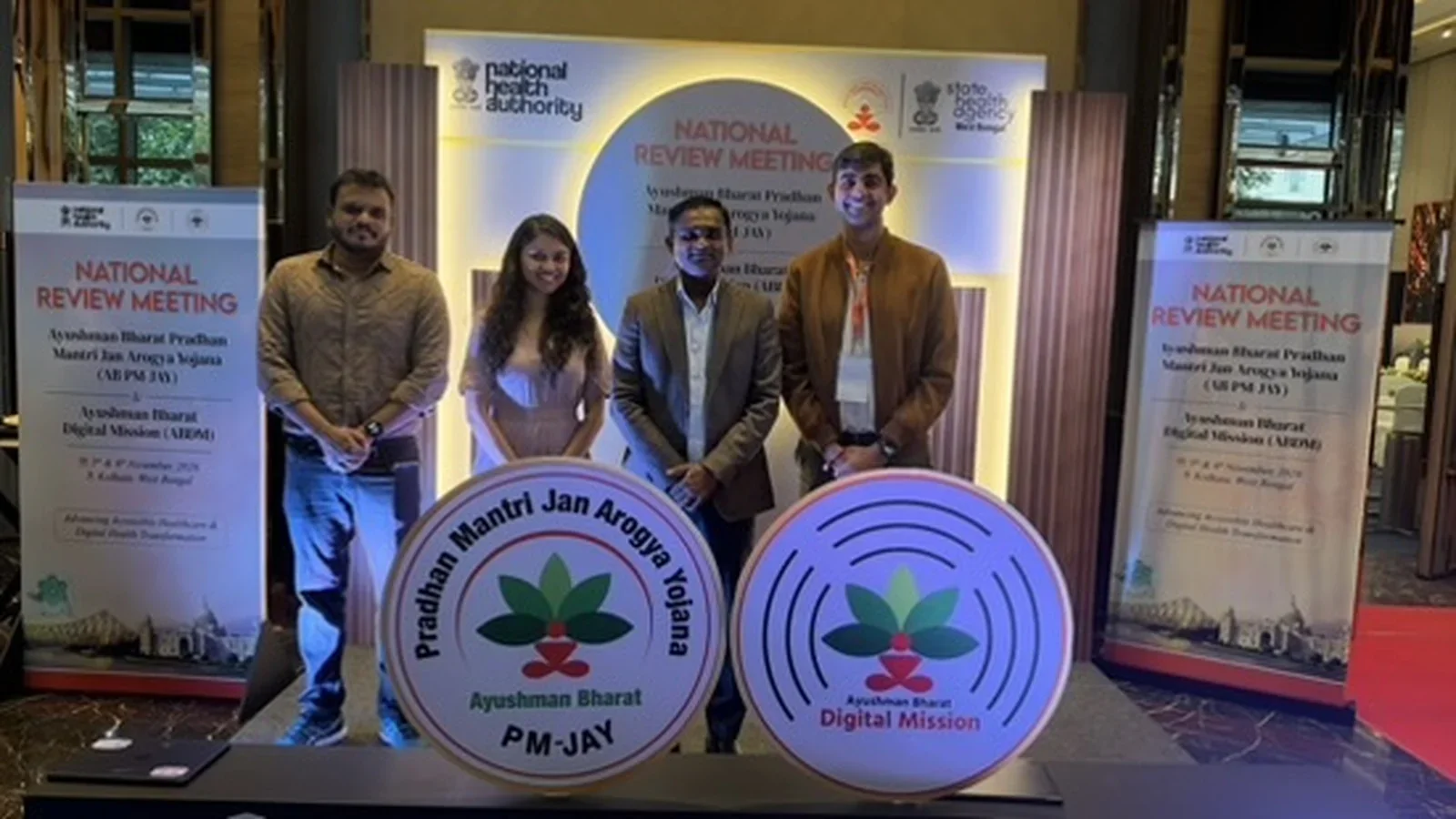
The solution will run on National Health Authority infrastructure powered by Amazon Web Services. It was selected through the authority's Expression of Interest process for open-source ambient AI voice-to-text solutions, which included a demonstration before its Evaluation Committee. The scribe was demonstrated at the authority's National Review Meeting with states and Union territories in Kolkata on 5 and 6 November.
How the voice scribe works
The Voice Scribe listens to a consultation and prepares a structured clinical note covering complaints, history, medications, vitals, laboratory findings, diagnosis and plan, in the FHIR format used for digital health records.
It supports more than 15 Indian languages, including mixed-language conversations, and every note is reviewed and approved by a verified doctor before it is saved and linked to the patient's ABHA, the Ayushman Bharat Health Account.
Built on Indian technology
The scribe is powered by two India-built technologies. The first is Parrotlet-A 2.5 Pro, an open-weight speech model built for Indian healthcare voices, whose weights are available on AIKosh and Hugging Face. It recorded the lowest error rate in a public benchmark of 6,550 real Indian consultations across five languages.
The second is Lipi, an open-source agentic harness that turns conversations into structured records. The scribe's electronic medical record system is built on it.
A secure, open design
The solution is designed to run entirely within the National Health Authority's own airgapped secure environment. Public hospitals will be able to use it embedded in their existing hospital management information systems, on its own screen, or through application programming interfaces on the open MedScribe Alliance standard.
Doctors will sign in through the Healthcare Professionals Registry, the national registry of verified health professionals.
From a private practice tool to a national role
The selection builds on EkaScribe, EkaCare's existing voice scribe, which is already used by more than 1,000 doctors in private practice. "Doctors should be able to give their full attention to the patient, not to a keyboard," said Bhaskar Chaudhary, Chief Product Officer at EkaCare.
The selection is a technology partnership, not yet a nationwide rollout. How widely the scribe reaches public hospitals will depend on how the National Health Authority deploys it in the months ahead.