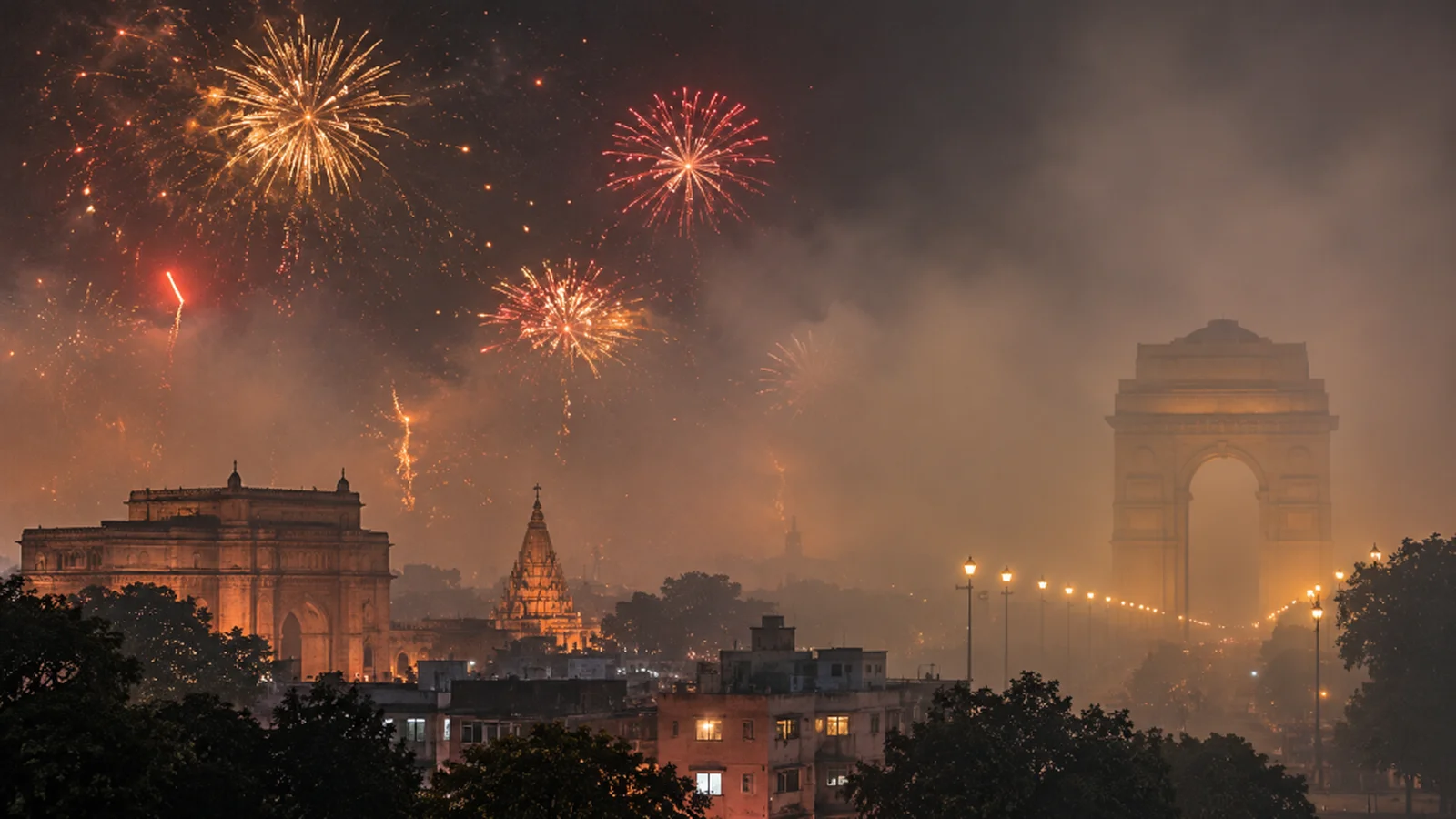
Air quality across major Gujarat cities deteriorated sharply during Diwali celebrations on the night of November 8 and the early hours of November 9, with several cities recording Air Quality Index (AQI) levels above 600. Vadodara recorded an AQI of 1,128 at 11.30 pm, the highest among the Gujarat cities listed, while Rajkot recorded 1,041 around 1 am.
Vadodara and Rajkot cross 1,000
Vadodara registered an AQI of 1,128 at 11.30 pm, making it the highest among the Gujarat cities listed. Rajkot recorded an alarming AQI of 1,041 around 1 am.
Surat recorded an AQI of 932 at 11.30 pm, followed by Ahmedabad at 636 around midnight. Gandhinagar, the state's green capital, also witnessed severely polluted air, with its AQI reaching 620 at 11.31 pm.
The readings highlight the severe deterioration in air quality during the festival, when firecracker emissions add to the existing pollution load.
Delhi was worse still
The situation was not limited to Gujarat, with Delhi recording an AQI of 1,760 around 1 am, making it the most polluted city in the world during the night.
These exceptionally high readings point to hazardous air conditions during the peak Diwali celebrations, raising concerns over the health risks posed by the pollution, particularly for children, elderly people and those with respiratory conditions.
What the AQI numbers mean
According to India's Central Pollution Control Board (CPCB), the National Air Quality Index is divided into six categories. An AQI of 0 to 50 is classified as Good, indicating minimal health impact, while 51 to 100 is Satisfactory, with minor breathing discomfort possible among sensitive individuals.
A reading of 101 to 200 falls under Moderate, which may cause breathing discomfort to people with lung or heart conditions, including asthma patients. An AQI of 201 to 300 is categorised as Poor, when prolonged exposure can cause breathing discomfort to most people.
The 301 to 400 range is classified as Very Poor, with prolonged exposure increasing the risk of respiratory illness, while 401 to 500 is considered Severe, potentially affecting even healthy people and seriously impacting those with existing respiratory or cardiovascular conditions. The Diwali night readings in Vadodara and Rajkot went far beyond even the top of this scale.
Readings come with a caution
The figures come from AQI.in and have not been independently verified against Central Pollution Control Board readings, so they should be read as indicative rather than official.
Even so, the pattern across cities was consistent: firecracker smoke drove air quality to hazardous levels within hours, and the worst readings came in the late night hours when celebrations were at their peak.