
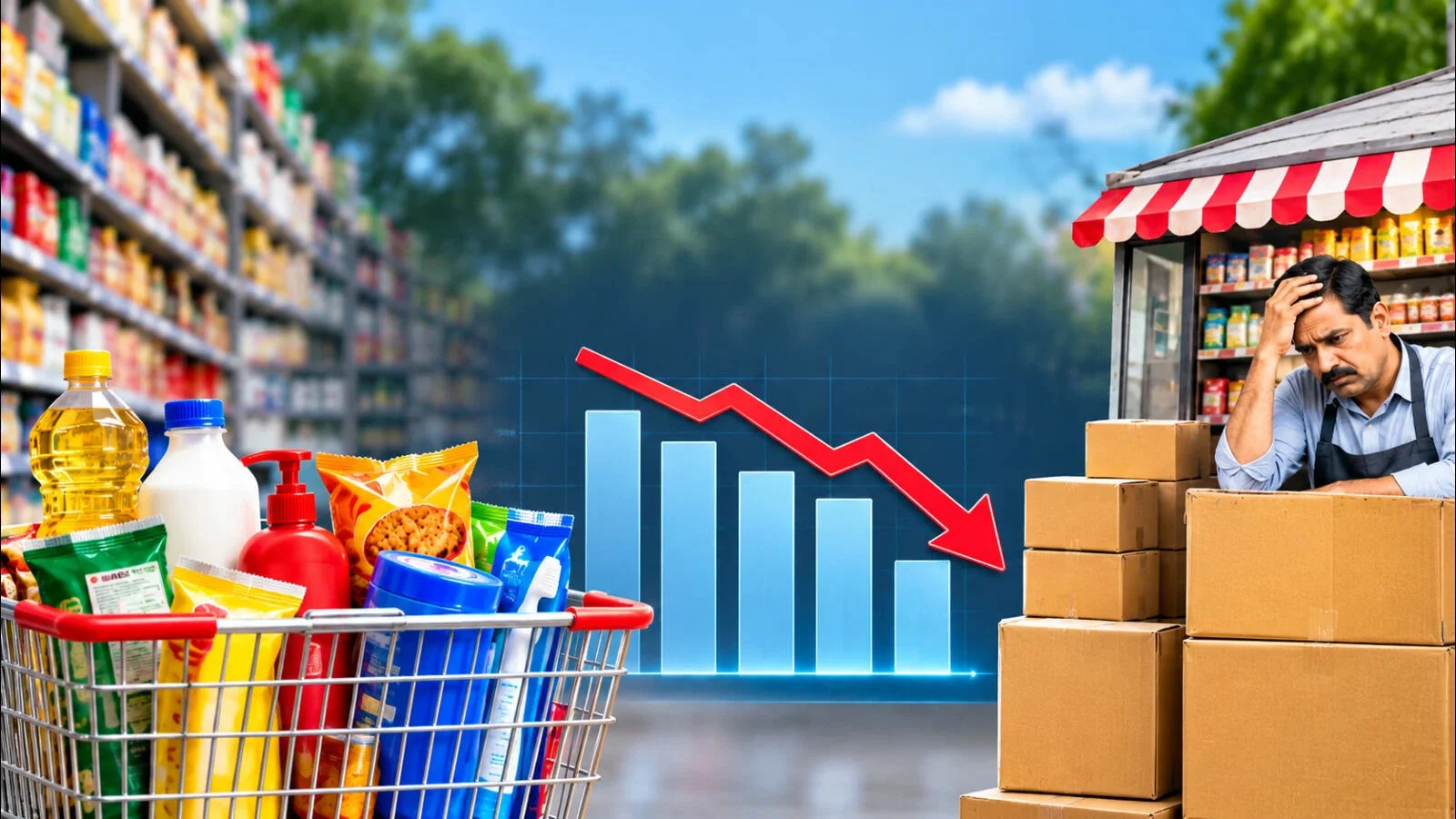
The September quarter was not a good one for India's fast-moving consumer goods sector. Sales volume growth fell to 3.6%, down from 4.7% in the same quarter a year ago and 5.2% in the April-June quarter of 2026, according to data from Worldpanel by Numerator.
Slow rural demand and rising costs hit small companies hardest, while big listed companies recorded strong growth in the same period. The split between large and small players is now the clearest story in the sector.
Big Brands Grow, Small Firms Struggle
The large listed companies had a strong quarter. Hindustan Unilever recorded volume growth of 7%, Marico's business grew 10%, Godrej Consumer Products sales rose 8% year on year, and Nestle India recorded volume growth in double digits.
Small companies, by contrast, saw their volume growth fall. They operate mostly in rural markets, where demand stayed weak, and they have fewer resources to deal with rising costs or supply disruptions.
Parle Products vice-president Mayank Shah said it looks like small companies are losing ground to big companies in most categories, especially in rural markets where most small companies operate. Compared with big companies, small companies have fewer resources, so they have less ability to deal with rising costs or supply disruptions.
Category and Rural-Urban Split
The slowdown touched every part of the sector. Personal Care grew 3.0% in July-September 2026, against 4.4% a year ago and 3.0% in April-June 2026. Home Care grew 4.0%, against 6.1% a year ago and 5.4% in the previous quarter. Food and Beverages grew 3.5%, against 4.4% a year ago and 5.4% in April-June.
The rural-urban split was nearly even in the quarter, but both were weaker than a year ago. Urban growth was 3.5%, against 5.2% a year ago and 5.2% in April-June. Rural growth was 3.6%, against 4.2% a year ago and 5.3% in the previous quarter.
Why Small Companies Are Hurting
Shah also pointed to a base effect from last year. After last year's GST rate cut, small companies cleared two months' inventory in just a few days, which created a high base for comparison this year.
Marico managing director Saugata Gupta said inflation and supply-chain disruptions helped big companies and hurt small and regional companies. He said that in difficult times small and regional companies usually suffer while big companies benefit.
Shortages of stocks, packaging material and commercial gas affected small companies more, Gupta said, because they have less room to absorb such shocks. Worldpanel tracks the sales of branded and unbranded products, including loose items, giving a broad picture of consumption across the country.