
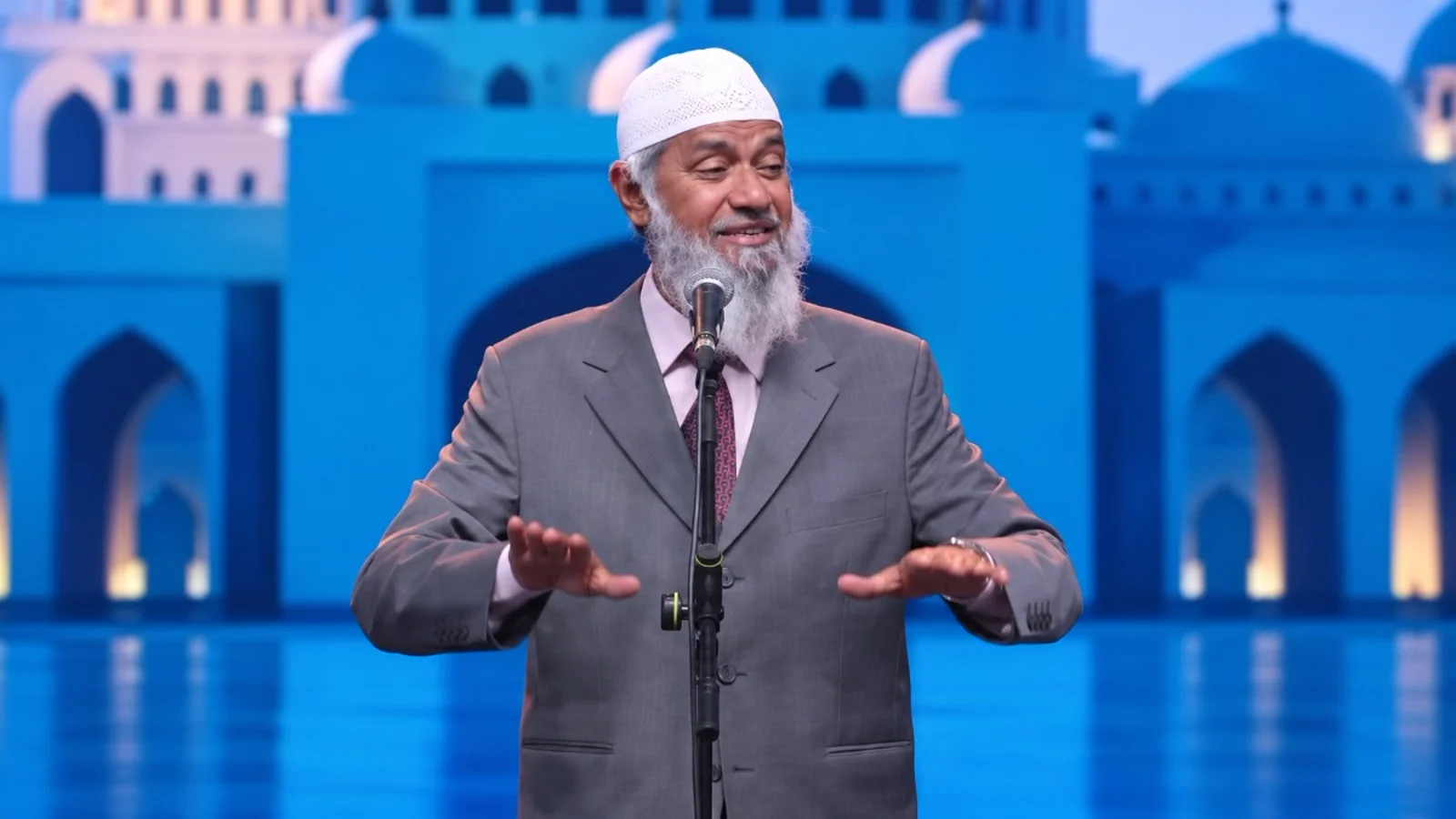
Fugitive Indian Islamic preacher Zakir Naik has drawn sharp criticism from Indians, Pakistanis and Afghans after defending the Taliban's restrictions on girls' education in Afghanistan. In a video clip, Naik argued that the Taliban had only delayed secondary and higher education for girls because of security concerns and a shortage of female teachers, and claimed Afghan women were pursuing advanced degrees in Islamic studies.
The remarks, by a man who has lived in Malaysia since seeking asylum there in 2017, triggered a backlash from journalists, activists and academics across the three countries, who questioned his claims and accused him of justifying the restrictions. Naik left India in 2016 amid allegations that his speeches had inspired one of the attackers in the Dhaka cafe attack, and he faces charges in India including promoting religious hatred, unlawful activities and money laundering, all of which he denies. India's efforts to extradite him have so far not succeeded.
Naik said in the video that not everything in the media was true, and claimed he had spoken personally to Taliban representatives. His argument was that if education was delayed until the right teachers were available, there was no problem at all.
What Naik claimed about schooling in Afghanistan
Naik claimed he had discussed the restrictions directly with Taliban representatives and said the group allowed girls to study up to Class 6, postponing further schooling only because the environment was unsafe. He also argued Afghanistan did not have enough female teachers for secondary education, and claimed women could still pursue advanced studies in Sharia, Arabic and the Quran, including master's degrees and doctorates. On that basis, he said, it was wrong and misinformation to say women had no higher education.
Those claims run against the findings of United Nations agencies. According to UNICEF, more than 2.6 million Afghan girls have been denied secondary education since the Taliban returned to power on 15 August 2021. Girls have been barred from formal schooling beyond Class 6 since September 2021, and women have been excluded from universities since December 2022, making Afghanistan the only country where secondary and higher education is effectively closed to girls and women.
The restrictions widened step by step after 2021. The Taliban introduced gender segregation in classrooms and required female teachers for girls, reversed plans to reopen secondary schools for girls in March 2022, barred women from public and private universities in December 2022, and in December 2024 prohibited women from attending medical training institutes, including nursing and midwifery courses, according to the US Special Inspector General for Afghanistan Reconstruction and the UN Assistance Mission in Afghanistan.
Afghans question the teacher-shortage argument
Afghan critics focused on the central weakness they saw in Naik's argument: if girls cannot study, where will the female teachers of the future come from? Belgium-based former Afghan security forces member Azim Shinwari asked how girls prevented from studying were supposed to become the qualified teachers Afghanistan needs, and asked for evidence behind the claim about postgraduate Islamic studies. He also recalled reporting an alleged meeting between Naik and Taliban intelligence representatives in Saudi Arabia.
Mariam Solaimankhil, a member of Afghanistan's Parliament in Exile, ridiculed the explanation, pointing out that the same female teachers Naik said were awaited had themselves been banned from working. Mahbob Shah Mahbob, editor of Afghan International Pashto, questioned whether a closure could honestly be called a postponement, asking where the teachers were supposed to come from if schools were closed. Afghan-born, US-based journalist Lina Rozbih said that if Naik truly supported the Taliban's policy, he should live under the Taliban regime himself instead of defending it from elsewhere.
Malala's father and Indian scholars join the criticism
Ziauddin Yousafzai, the Pakistani education activist and father of Nobel laureate Malala Yousafzai, called Naik's justification deeply troubling and disappointing. He argued that presenting an indefinite ban as a mere postponement, without explaining how the teacher shortage could ever be fixed, was not a credible defence, and warned such arguments risked giving religious legitimacy to the exclusion of Afghan girls from education.
Indian Islamic scholar A Faizur Rahman questioned why Naik enjoyed widespread support in the Muslim world, particularly in Malaysia, and tagged Malaysian Prime Minister Anwar Ibrahim in his post. Indian historian S Irfan Habib also commented on the Malaysian leader's generosity, while YouTuber-historian Ruchika Sharma criticised religious leaders who failed to condemn the restrictions, calling them one of the grossest violations of human rights in the world. The restrictions are now entering their sixth year in 2026, with no announced date for reopening secondary schools and universities to girls and women. A separate UNICEF assessment from April warned Afghanistan could lose up to 20,000 female teachers and 5,400 healthcare workers by 2030 if the restrictions on education and employment continue.