
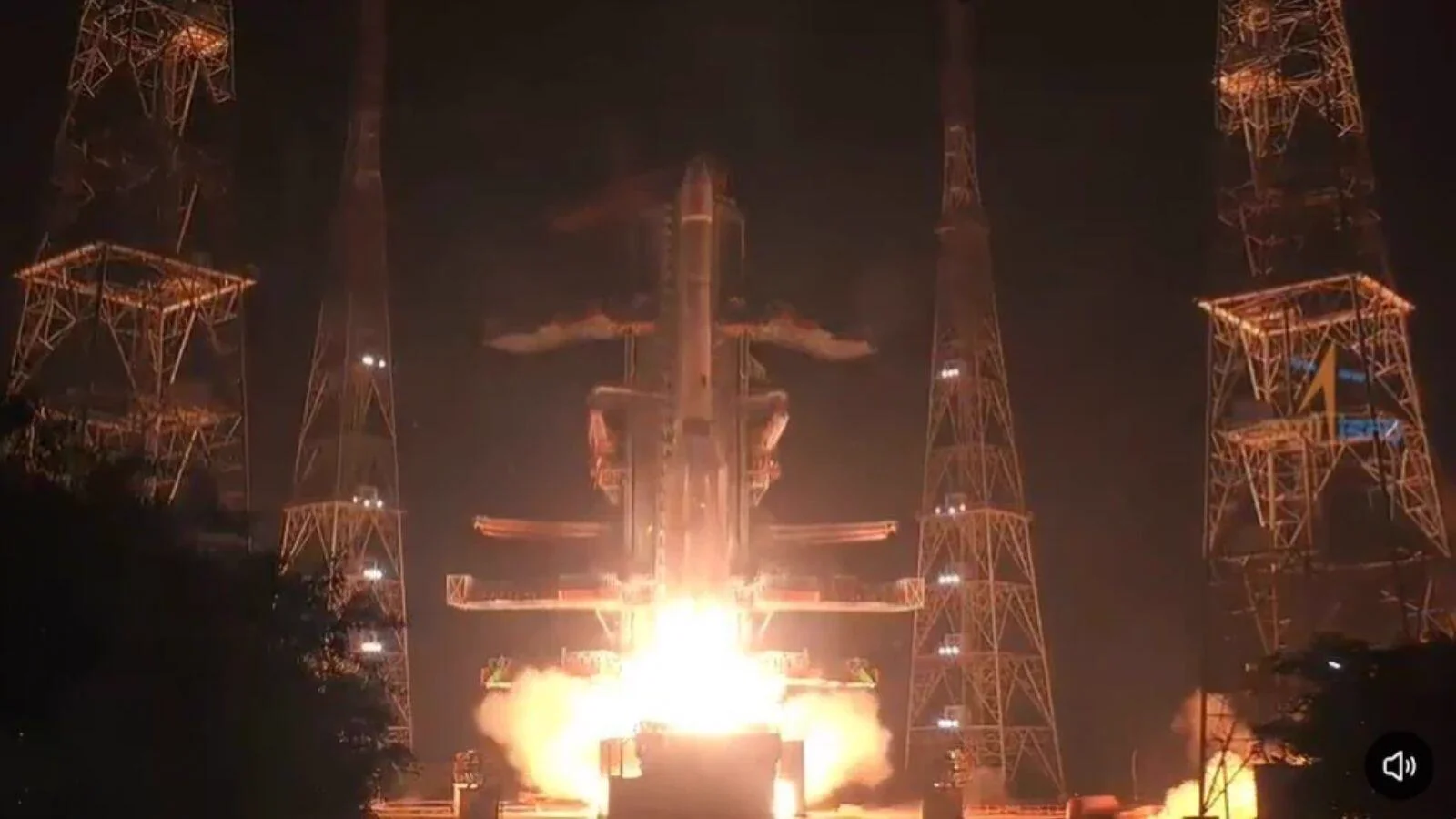
India's space programme has added a key piece to the country's own navigation system. The Indian Space Research Organisation has successfully launched the NVS-03 navigation satellite, a mission that restores the indigenous NavIC system to the minimum strength it needs to provide positioning services on its own.
Prime Minister Narendra Modi congratulated ISRO's scientists and engineers on the success. In a post on X on Saturday, he said the launch is an important step towards strengthening NavIC, adding that the satellite's improved capabilities will support self-reliance and help deliver navigation services to people across the country.
NavIC was down to three working satellites
NavIC had been running short of satellites for some time. Information given in Parliament in July 2026 showed that only three satellites, IRNSS-1B, IRNSS-1I and NVS-01, were providing positioning, navigation and timing services. A basic positioning service needs at least four active satellites, so NavIC could not offer an independent GPS-like positioning service, although its timing service kept working.
NVS-03 joins those three working satellites and takes the constellation back to its minimum operating strength. ISRO chairman V. Narayanan said after the mission that the new satellite strengthens NavIC's positioning, navigation and timing services.
Why NVS-02 matters to this story
The road to this launch included a setback. NVS-02, launched on 29 January 2025, never reached its planned orbit. An investigation found that an electrical signal did not reach a pyro valve in the satellite's oxidiser line, so its propulsion system could not work and the satellite could not be placed in its intended orbit. NVS-03 now fills the gap that failure left behind.
Why an Indian GPS matters for the military
A strong NavIC is about more than space technology. Modern warfare depends on precise location and time data for missiles, precision-guided weapons, fighter aircraft and warships, and that data comes from positioning, navigation and timing signals. The United States runs GPS and Russia runs GLONASS, and Indian forces use several systems as needed. Depending fully on another country's system carries a strategic risk, since access, signal quality or services could be restricted or changed during a war or a period of tension. NavIC gives India an independent option of its own.
What changes for ordinary users
The benefits are not limited to the armed forces. ISRO's chairman has described NavIC as important for the One Nation, One Time project. Railways can use it to track trains in real time, road transport can get better vehicle tracking and navigation, shipping can monitor vessel locations and movement more easily, and disaster management can draw on stronger location-based services in emergencies.
A standout feature of NVS-03 is its indigenous rubidium atomic clock, fitted alongside some foreign atomic clocks. Atomic clocks matter because a navigation receiver works out its position from how long a satellite's signal took to reach it, and that calculation needs extremely accurate time.