
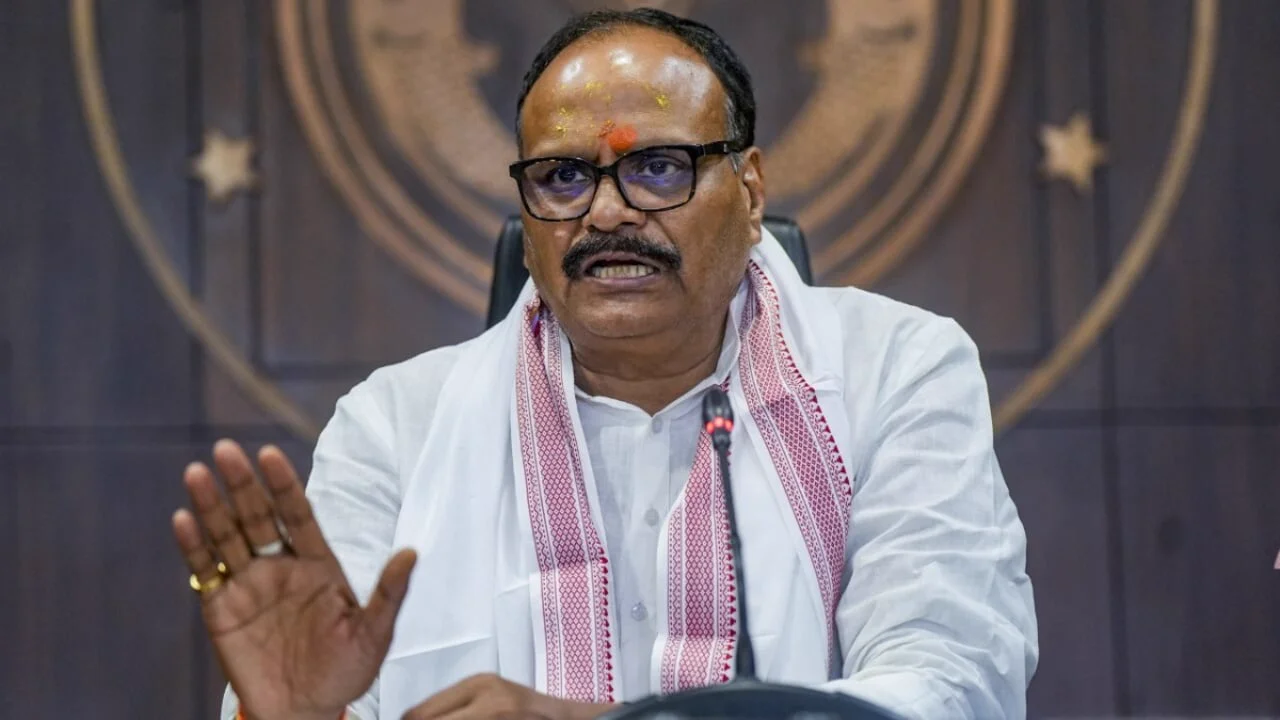
Uttar Pradesh Deputy Chief Minister Brajesh Pathak on Thursday rejected Samajwadi Party chief Akhilesh Yadav's remarks on the BJP's performance in the recent Legislative Council elections.
Pathak said the BJP would retain power in Uttar Pradesh for a third consecutive term with a huge majority in the 2027 Assembly elections.
He said the Samajwadi Party should not daydream, adding that the BJP had retained its seats and was preparing for the next state elections.
Earlier on Thursday, Yadav described the Legislative Council election results as a double defeat for the double-engine government.
Elections were held for 11 seats from teachers' and graduates' constituencies. The BJP won six seats, while the Samajwadi Party secured five.
The Samajwadi Party improved its tally by two seats in the elections, which were seen as symbolically important ahead of the 2027 Uttar Pradesh Assembly polls.
Pathak targets Samajwadi Party on law and order
Pathak also targeted the Samajwadi Party over law and order, alleging that the situation deteriorated whenever the party was in power in the state.
He claimed infrastructure and law and order had improved under the BJP government in Uttar Pradesh.
Referring to the Centre's welfare schemes for the poor and development work carried out in Uttar Pradesh, Pathak said the BJP was preparing for the 2027 elections and would again secure a huge majority.
Pathak was speaking to reporters on the sidelines of a traditional wrestling competition at a temple complex in Mallawan in Hardoi district.
The competition is organised as part of a tradition dating back more than a century and held in memory of a revered figure, featuring wrestlers from India and abroad.
Welcoming the participants, Pathak thanked the organisers and local residents, and said such events helped preserve India's traditional wrestling culture and encouraged rural youth to take up sports.
Asked about alleged shortcomings in facilities at the Hardoi medical college, Pathak said they would be developed gradually, comparing the institution's growth to that of a child who gains abilities with age.