
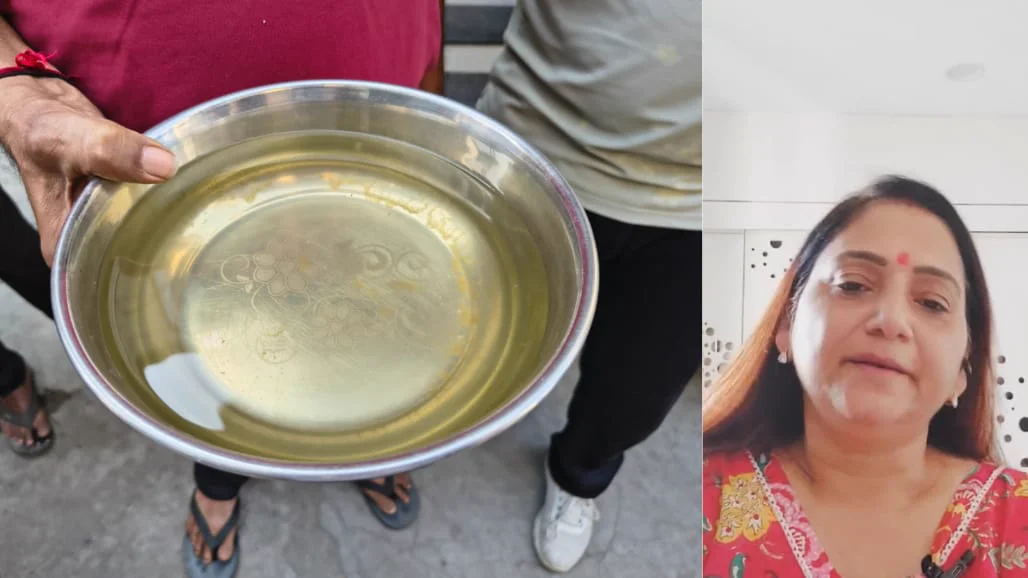
Residents across Surat are grappling with contaminated yellow tap water, triggering health concerns and mounting political pressure on the municipal administration. The issue came to the forefront during a general board meeting of the Surat Municipal Corporation.
BJP corporator Vrajesh Unadkat raised concerns about persistent supplies of discoloured, foul-smelling water in his ward and across multiple city zones, urging authorities to resolve the crisis ahead of Diwali to spare the civic body from public backlash. Complaints also poured in from corporators representing various zones, exposing vulnerabilities in the city's water distribution and filtration network, particularly in the Rander zone.
Corporator defends civic body, cites El Nino
BJP corporator Urvashi Patel sought to defend the civic administration through a social media statement. Patel acknowledged public grievances about yellow water supplies and the threat of waterborne diseases across Athwa and Rander, but said the crisis was entirely natural rather than man-made.
According to her stated rationale, global shifts driven by El Nino have significantly lowered water levels in the Tapi River, which serves as Surat's primary drinking water source. She argued that receding water levels cause riverbed silt to mix into the supply channels, directly compromising water quality.
Eleven cusecs claim questioned
Patel further claimed that the impending release of eleven cusecs of water from the Ukai Dam would elevate the Tapi River's water levels and naturally resolve the contamination issue. Technical discrepancies in her statement immediately drew skepticism.
Past operations to flush out silt and improve water quality at the Tapi weir necessitated releases of eleven hundred cusecs, with current discharges standing at fifteen hundred cusecs. Observers pointed out the stark contrast between the actual discharge figures and the eleven-cusec claim, raising questions about technical awareness and official data handling within the municipal ranks.
Residents await technical clarification
As residents continue to receive discoloured water, attention has shifted back to the hydraulic department. Citizens and local leaders await an official technical clarification to determine whether the crisis stems from environmental factors like falling river levels or systemic failures in municipal water treatment and distribution infrastructure.
The stance has invited intense scrutiny, pitting corporators demanding immediate administrative fixes against defenders invoking environmental factors. The debate is now centred on whether the administration will act on the supply system or continue to attribute the problem to climate factors.