
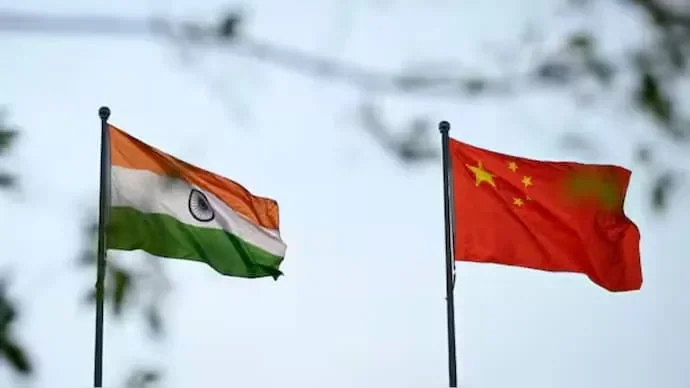
Strategic affairs expert Brahma Chellaney has raised concerns about what he describes as a two-pronged Chinese approach towards India, involving pressure along the border and the use of economic restrictions. His comments come amid reports of continuing face-offs between Indian and Chinese troops at several locations along the Line of Actual Control in Arunachal Pradesh. Chellaney's reading of Beijing's broader intentions is his analysis and should not be treated as an officially declared Chinese policy.
Face-offs continue along the Arunachal border
Indo-Tibetan Border Police Director General Shatrujeet Singh Kapur recently confirmed that face-offs between Indian and Chinese troops were continuing at several locations near the LAC in Arunachal Pradesh. Media reports said Indian and Chinese patrol teams came face to face near the Taksing area in Upper Subansiri district in July 2026. India and China hold different perceptions of the LAC in several sectors of the roughly 3,488 kilometre boundary, and these differences have repeatedly complicated patrol activities and led to face-offs, alongside the long-running border dispute in eastern Ladakh.
The economic pressure argument
Chellaney has also pointed to Chinese export restrictions affecting industrial equipment, industrial components, battery technologies and critical minerals. Such materials are important for electronics, battery manufacturing, energy storage and advanced industrial production. In his assessment, China's position in global supply chains gives it the ability to exert economic influence, and India's ambition to become a larger manufacturing hub makes reliable access to industrial inputs and alternative suppliers increasingly important. The intention behind individual export restrictions must still be assessed from the relevant rules, official announcements and their demonstrated effects, since a restriction alone does not establish its full strategic purpose.
Why supply chain security matters for India
India has been seeking to expand manufacturing in electronics, batteries, clean energy and semiconductors, and these industries require reliable supplies of specialised machinery, components and minerals. Dependence on a single country or a narrow group of suppliers can create vulnerabilities when trade restrictions, geopolitical disputes or supply disruptions occur. The two countries continue to maintain military and diplomatic channels to manage differences along the border, even though a final resolution of the boundary dispute remains a major challenge. Chellaney's comments highlight three areas likely to stay important for India: border preparedness, diversified supplies of critical materials and continued diplomatic engagement with China.